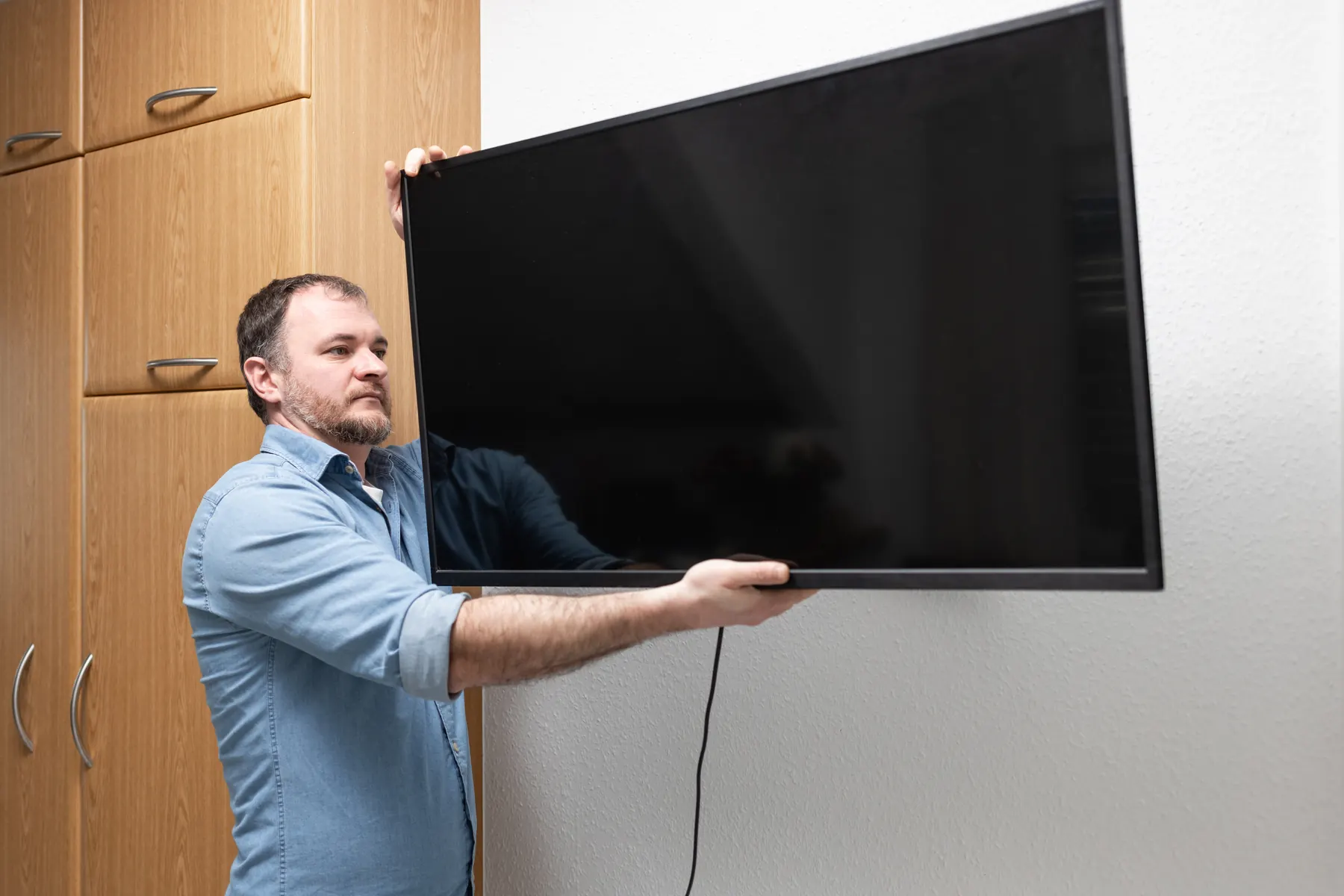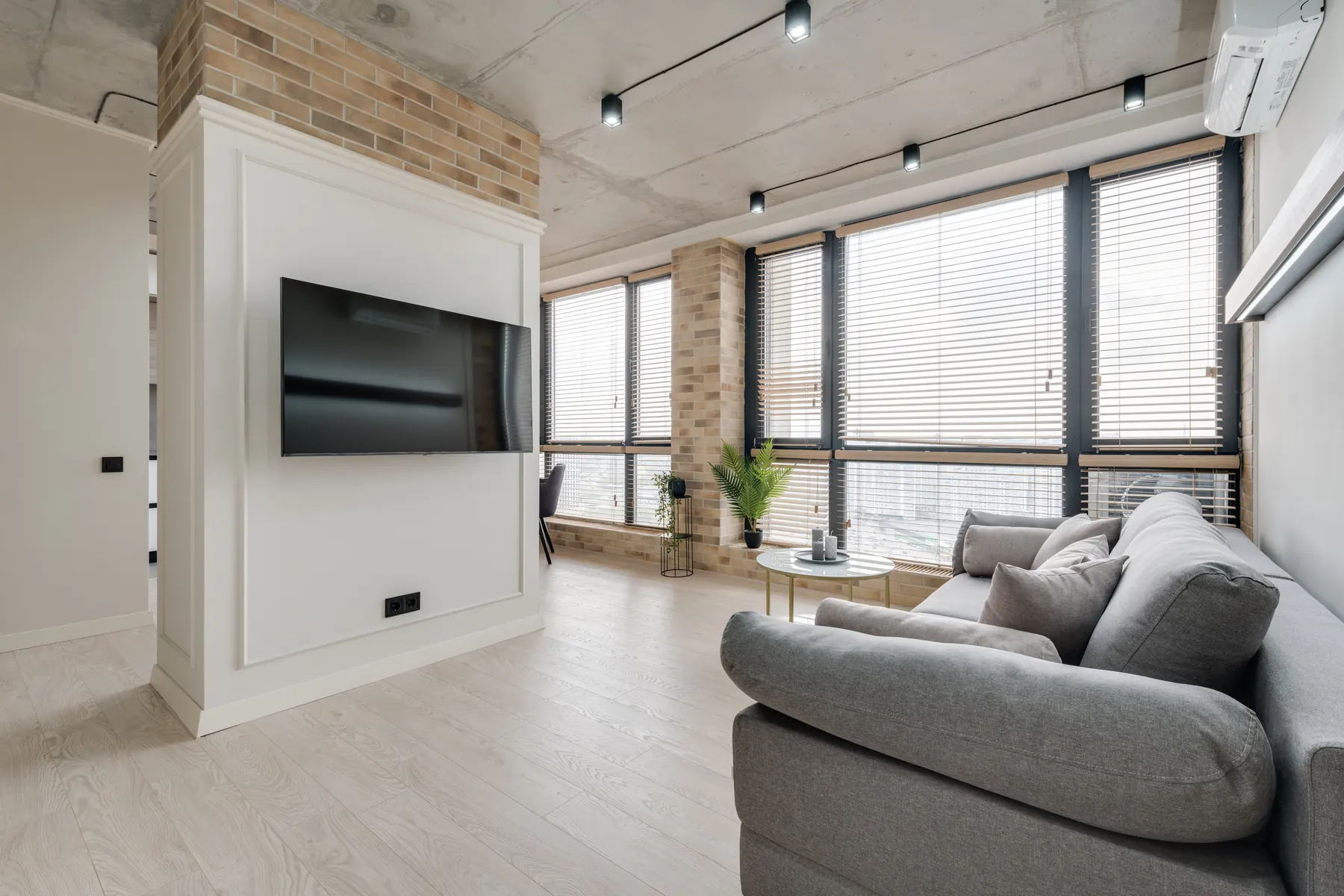
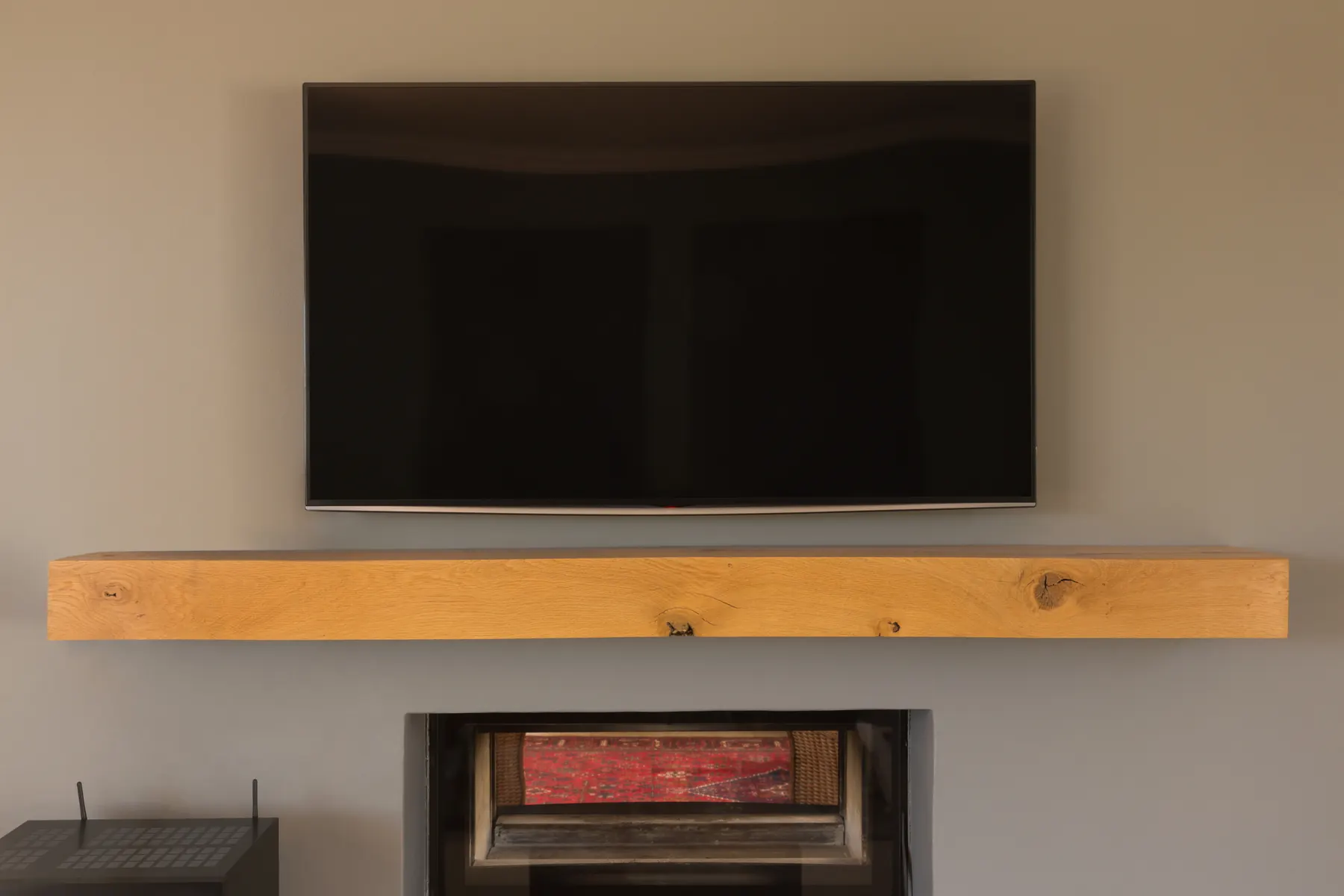
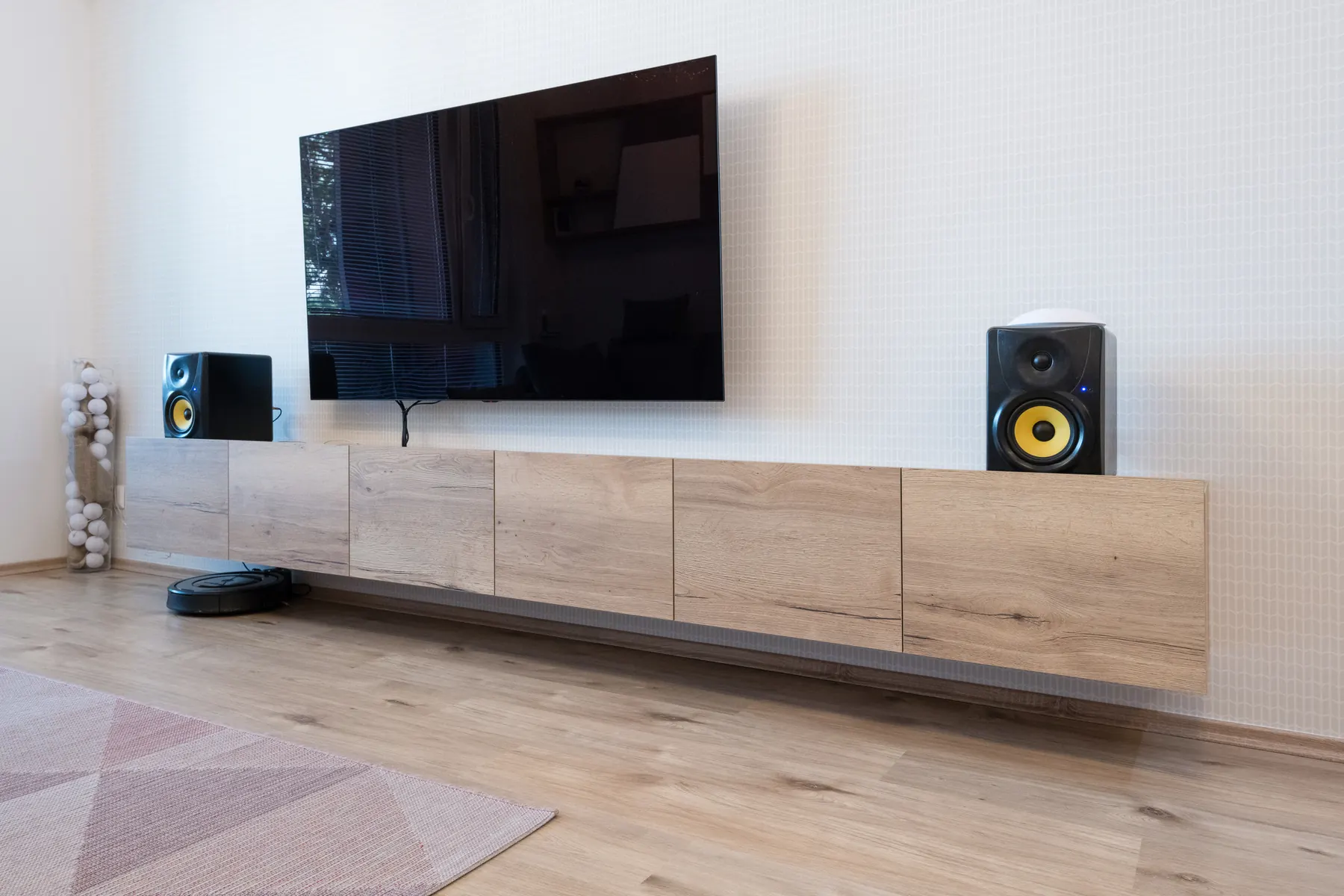
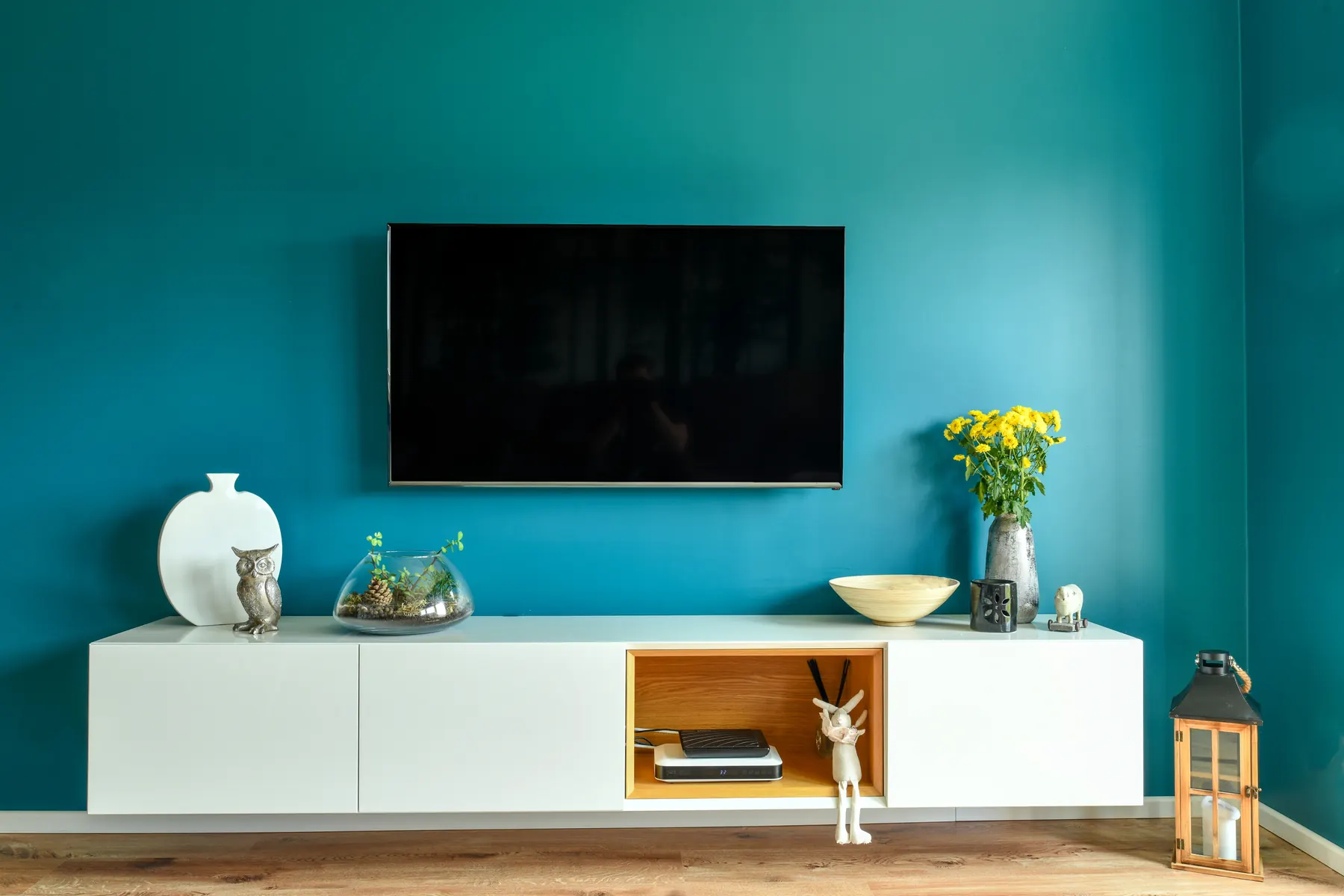
A mounted TV with cables hanging off it is a job half done.
Cables run inside the wall where the wall allows it, or in paintable trunking where it does not. Offered on every install.
On every job
Two kinds of cable, two sets of rules
Concealment is really two jobs with one result. Low voltage leads, which means HDMI, optical, network and speaker cable, can usually be run inside a hollow wall between the studs. They carry almost no current, they are allowed in the cavity, and they are the easy half.
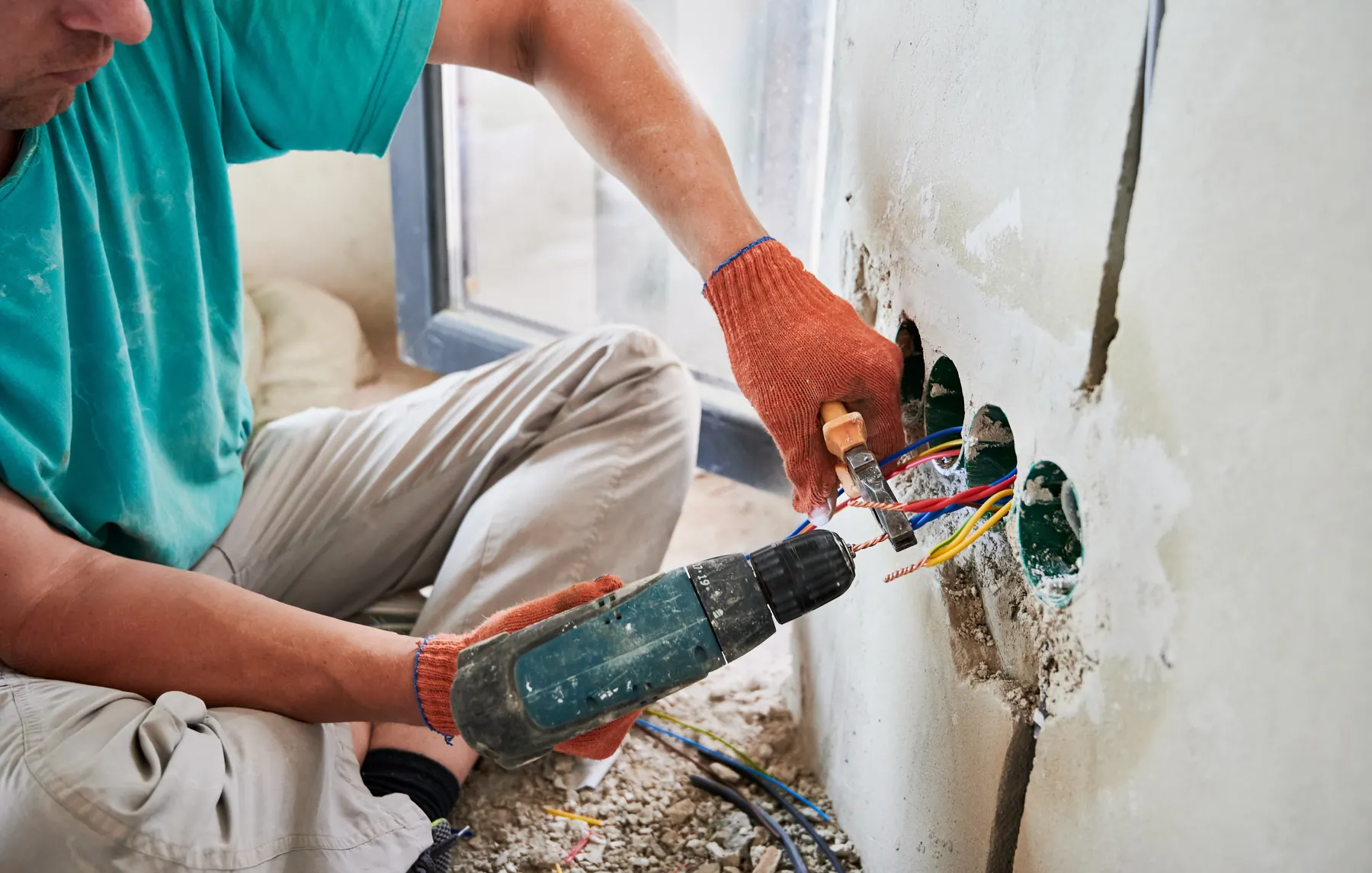
Mains power is the half people get wrong. You cannot feed a television by pushing a plug on a length of flex through one hole and out another. A lead buried loose in a wall is not concealed, it is hidden, and those are different things. The correct answer is a proper outlet behind the screen on a fixed circuit, and where that work is needed we coordinate with an electrician rather than improvise. Until then the screen can run off the socket it has, with the visible drop kept short and tidy.
In the wall, or on it
If the wall is hollow and the cavity is clear, we cut two small openings, pass the leads through and finish both ends with brush plates. From the sofa you see nothing. Cavities are not always clear, though. Noggins run across them, fire blocks close them off between floors, and insulation, ducting and pipework all turn up where the drawings said they would not. We find that out with a rod, not with a guess.
Where the wall is solid, the cables go on it instead. Poured concrete in a condo, brick, block and stone all mean trunking. Good trunking is not a compromise if it is done properly. It runs dead plumb from the screen to the unit, it is cut square at both ends, and it is made to be painted, so once it is your wall colour it reads as a shadow line rather than a fitting.
We tell you which one first
The part that matters is the order. The wall gets assessed before the drill comes out, so you know whether you are getting an invisible run or a painted channel before we take the screen out of its box. That is the whole difference between a clean job and an argument.
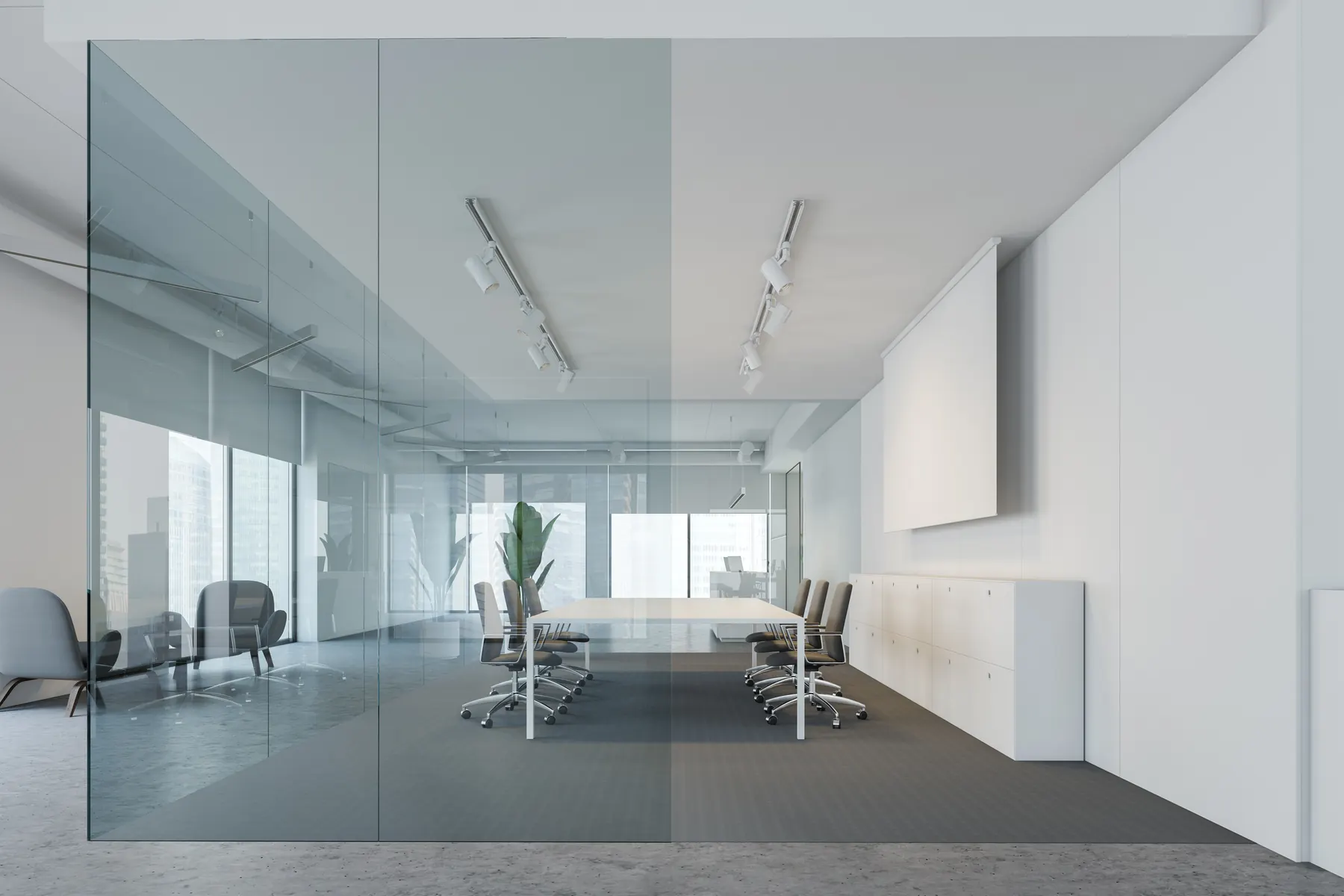
Concealment is included on every install we do, residential and commercial, and the quote for the work is agreed with you before any of it starts.
How it goes
The order of work.
Work out what the wall is
We check whether the wall is hollow, and whether the cavity is clear. Noggins, fire blocks, insulation and ducts all decide what can pass through and what cannot.
Separate signal from power
Low voltage leads and mains power take different routes. We tell you which route each one is taking and why, before anything is cut.
Cut in or trunk up
Two neat openings and brush plates where the wall allows a cavity run. Straight paintable trunking, fixed plumb and ready for your colour, where it does not.
Test and dress the ends
Every lead tested through to the screen, slack coiled behind the set rather than left loose, and the floor cleaned before we leave.
Can the power lead go inside the wall with the HDMI?
Generally no. Low voltage cable can usually run in a wall cavity. A length of mains flex cannot be buried loose in a wall, so the proper fix is an outlet behind the screen, wired by an electrician. We will tell you which job yours is.
What happens if the wall is solid concrete?
Then there is no cavity to use and the cables go in paintable trunking instead. We say that before we start rather than after the screen is up, because finding out late is how people end up disappointed.
Do you paint the trunking to match?
No, we do not paint. The trunking takes emulsion happily and you or your decorator can match it to the wall colour. We leave it clean, straight and ready for that.