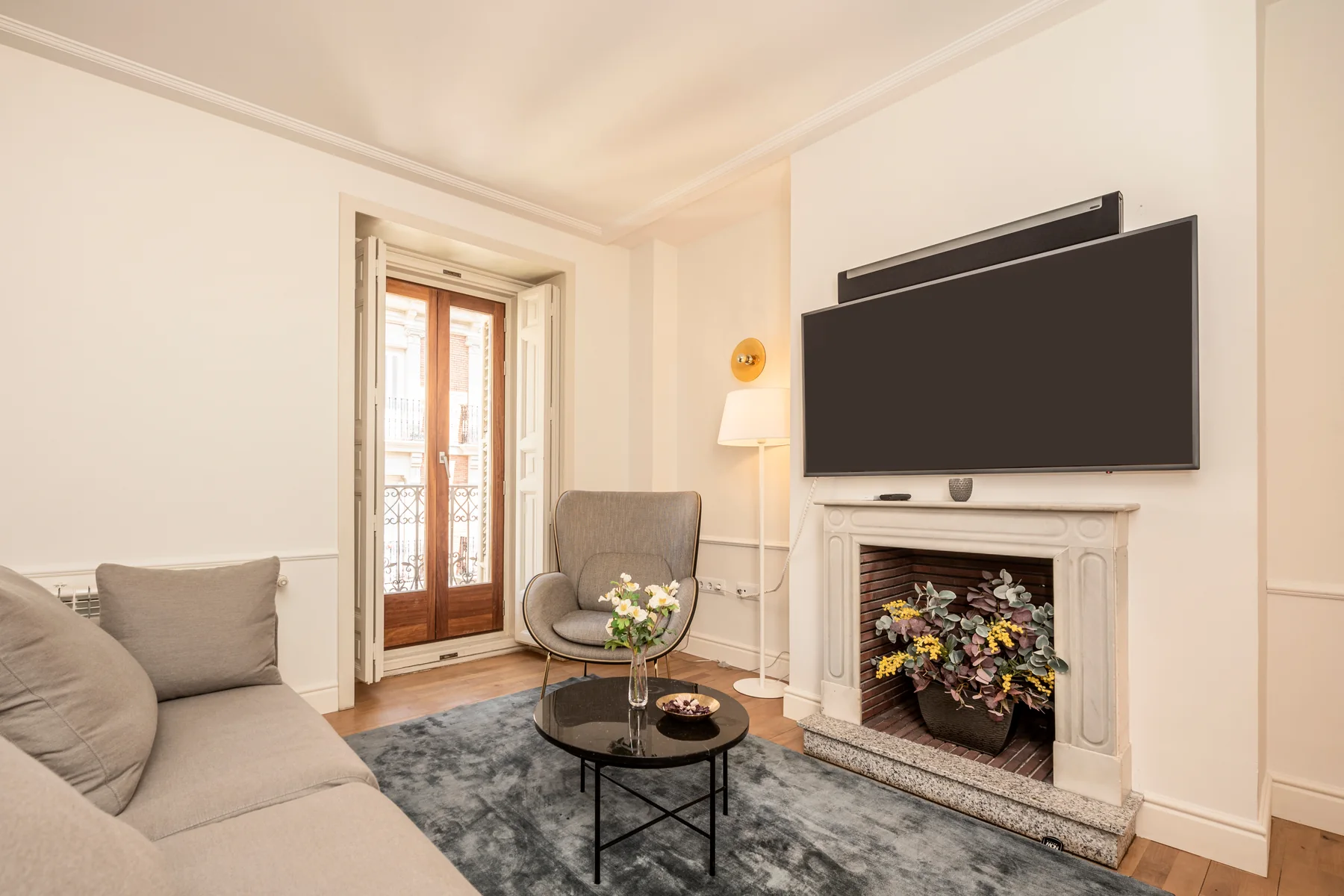
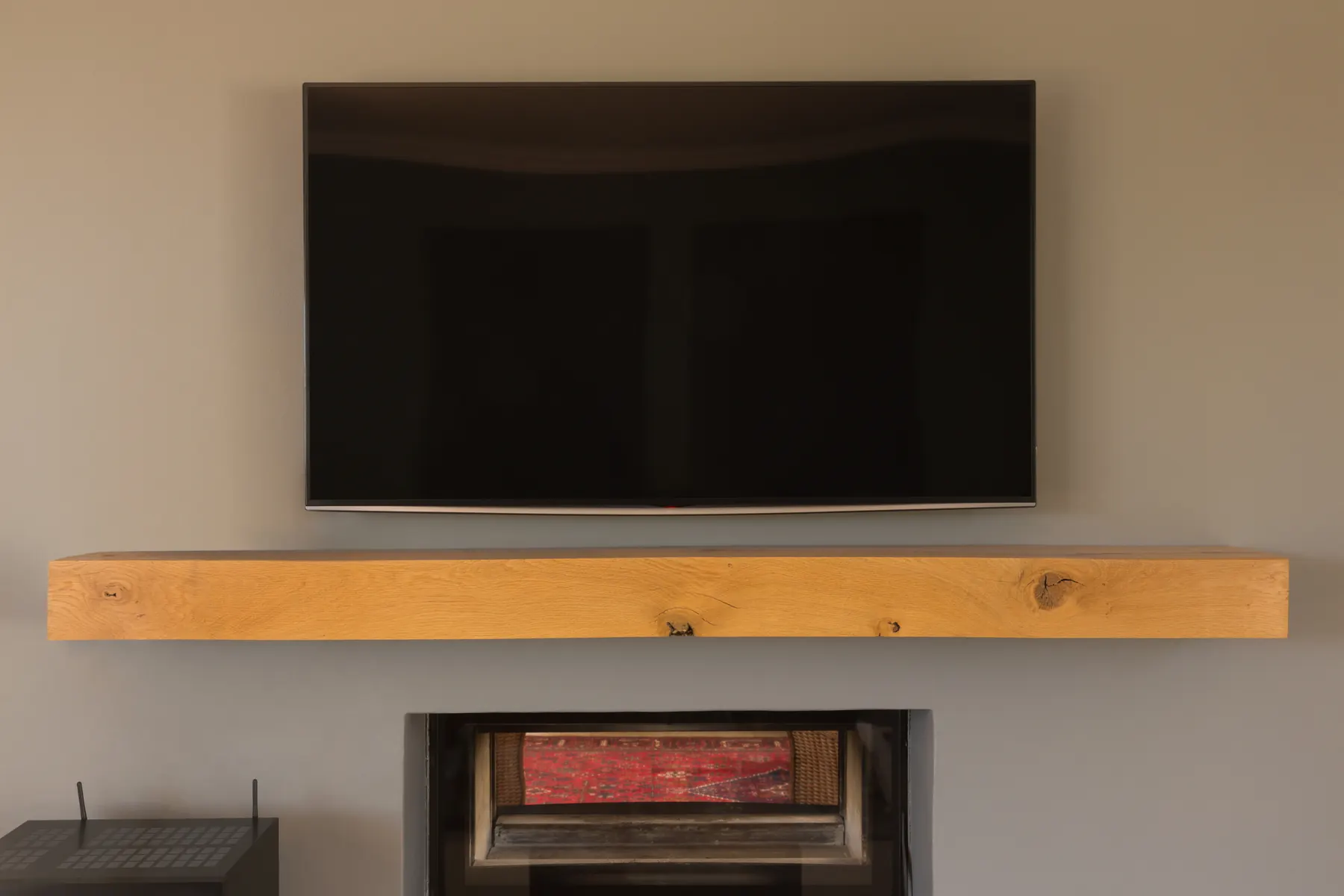
A mantel sets the height, and the height is the part that goes wrong.
Screens above mantels, chimney breasts and wood stoves, with the heat measured, the fixing matched to what the breast is really made of, and the tilt worked out first.
Heat checked first
Usually yes, and often you should not. Above a mantel the screen sits well above seated eye level, and above a working firebox the air can get hotter than the maker allows. Both are checked before anything is drilled. Where the height cannot be fixed with tilt, a pull-down arm is the answer.
Height is the part that goes wrong
A mantel sits at a height set by the firebox and the hearth. Put a screen above it and the centre usually lands a foot or more above seated eye level. Every inch of that rise is an inch the neck carries for the length of a film.
Do the geometry first. Take the rise from your eye level to the centre of the screen, divide it by the distance from the sofa to the wall, and that is the tilt needed to aim the panel back at your face. Twenty inches of rise at nine feet is about ten degrees, which a tilting plate handles easily. Past roughly fifteen degrees a tilting plate stops being the right tool and a pull-down or full motion arm starts. The height and tilt calculator runs the numbers for your own room.
Heat, and what the breast is made of
Above a working firebox the air at the mantel can exceed what the screen maker permits, and every manual states a figure. We check it before mounting rather than in January. A gas insert vented along the top of the surround is the worst case, because it sends hot air straight up the face of the breast. A sealed unit with a front vent, under a deep mantel shelf that throws the heat forward into the room, is the best.
Then the wall. A chimney breast can be solid masonry, brick veneer over a timber frame, a stone facing on a board, or a panelled false breast with a void behind it. Painted, they look identical. A test hole and the dust that comes out of it settle which one you have, and the masonry and concrete page covers the anchors each one needs. One rule holds across all four: the load goes into the masonry or the framing, never into the mantel. A mantel beam is a shelf.
Cables, and the arm nobody offers
A mantel usually means no outlet behind the screen. Signal cable can run inside a hollow breast where the void is clear. The mains lead cannot, because a flexible appliance lead is not allowed to sit loose in a wall, so it is either an outlet fitted behind the screen by an electrician or paintable trunking down the face of the breast.
Where the height cannot be tilted away, there is a mount most people are never offered. A pull-down arm brings the screen down to seated eye level to watch and returns it above the mantel afterwards. Where the numbers say so, we recommend it. The quote is agreed before anyone drills.
How it goes
The order of work.
Tell us what is under the mantel
Wood stove, gas insert, electric or purely decorative. That one answer changes how much of the rest of this matters.
Measure the seat, not the wall
Eye level from the chair you actually watch from, and the distance to the wall. Those two numbers give the rise and the tilt the screen will need.
Find out what the breast is
Solid masonry, brick veneer on a frame, stone on a board or a panelled false breast. A test hole and the dust out of it tell us which, because paint hides all four.
Check the heat
We take the temperature at mount height with the fire running and compare it to the limit in the manual for your screen. This happens before the bracket goes up.
Mount, tilt and tidy
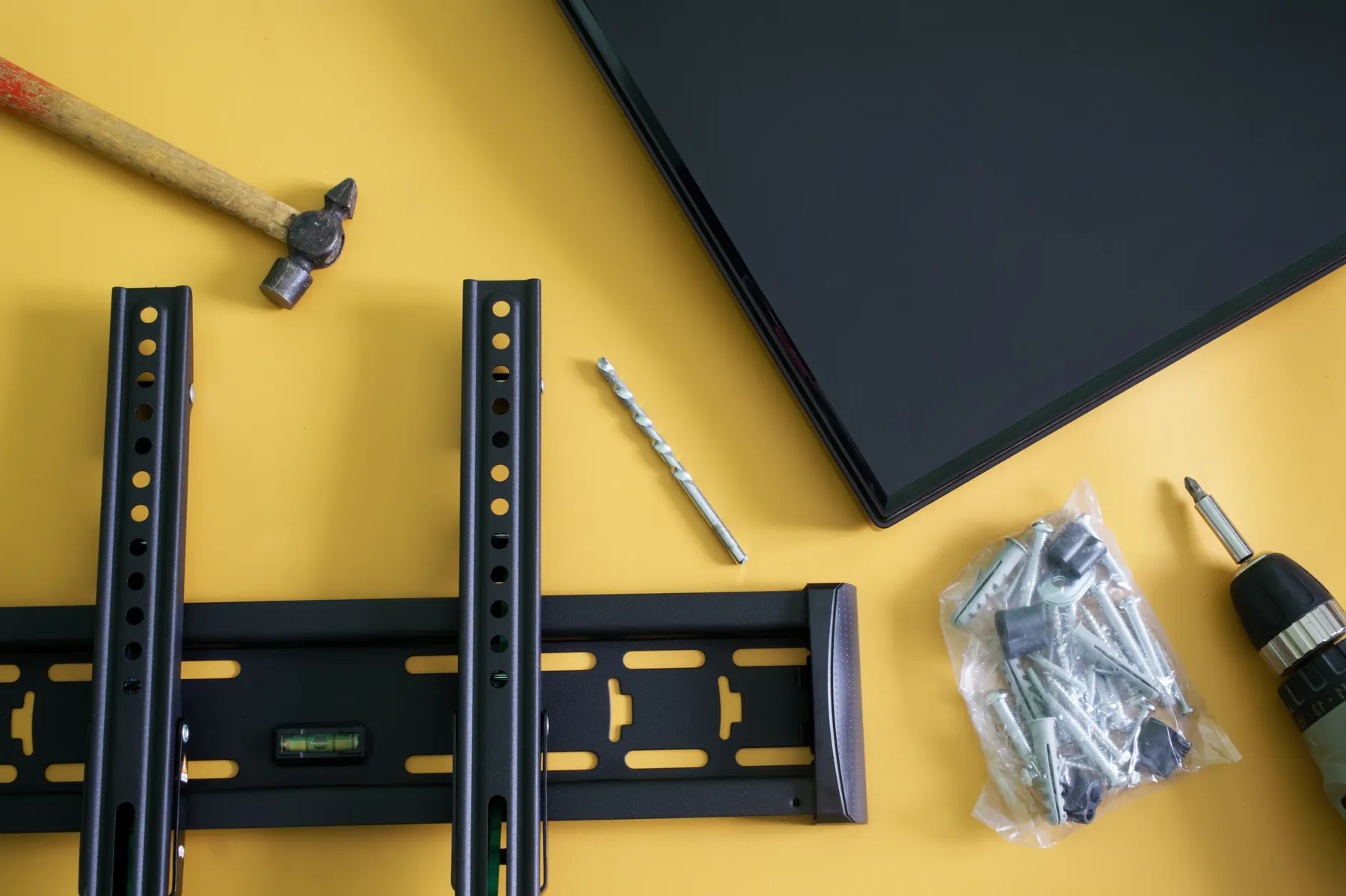
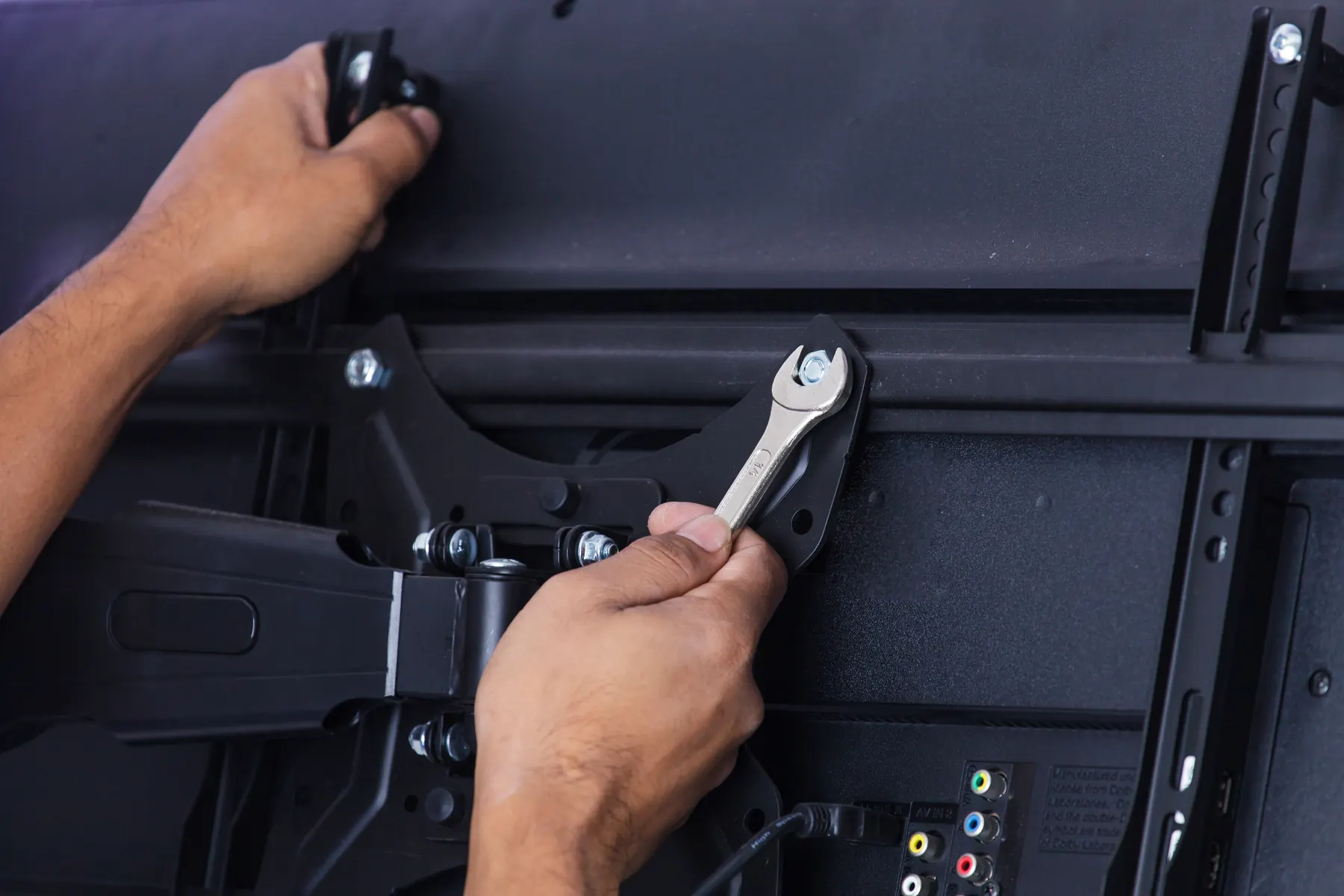
Anchors into the masonry or the framing, never into the mantel. Tilt set, cables concealed or trunked, packaging away with us.
Can the television hang off the mantel itself?
No. A mantel beam or a shelf on corbels is carrying itself and an ornament, and it is often only fixed back into the plaster. The load belongs in the masonry or the framing behind it, which is where the bracket goes.
Will the heat damage the screen?
It can, and every manufacturer states an ambient limit for exactly that reason. A gas insert vented along the top of the surround is the worst case. A sealed unit with a front vent under a deep mantel shelf is the best. We measure rather than guess.
Is there any way to get the screen down to eye level?
Yes, with a pull-down arm. It drops the screen to seated eye level to watch and lifts it back above the mantel the rest of the time. It needs sound structure behind it and clearance for the swing, and it is the right answer more often than it gets offered.
Can you hide the cables in a chimney breast?
Where the breast is hollow and the void is clear, the signal cables go inside it. Where it is solid masonry, they go in paintable trunking instead. Mains power is a separate question and needs a proper outlet rather than a flex pushed through a hole.