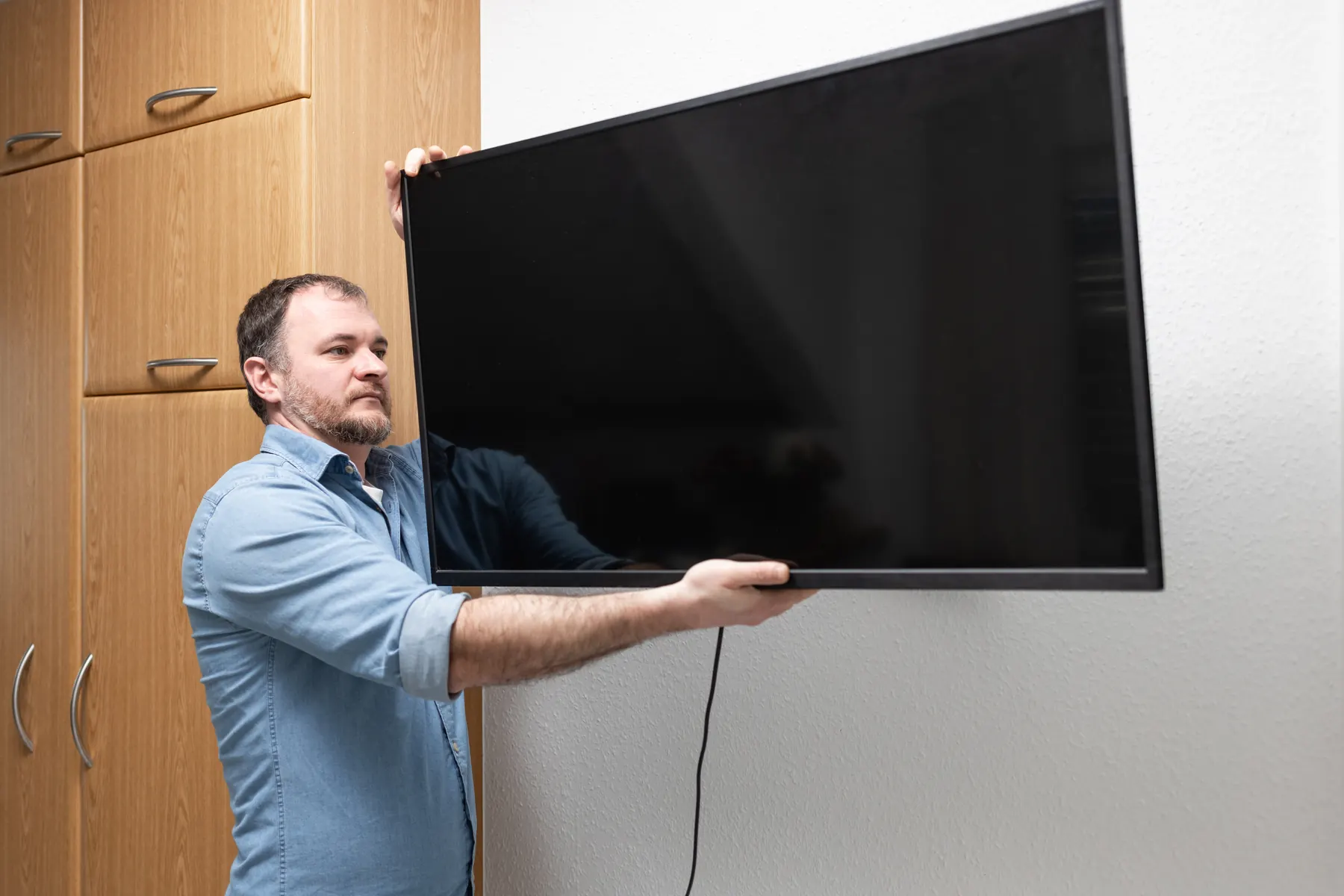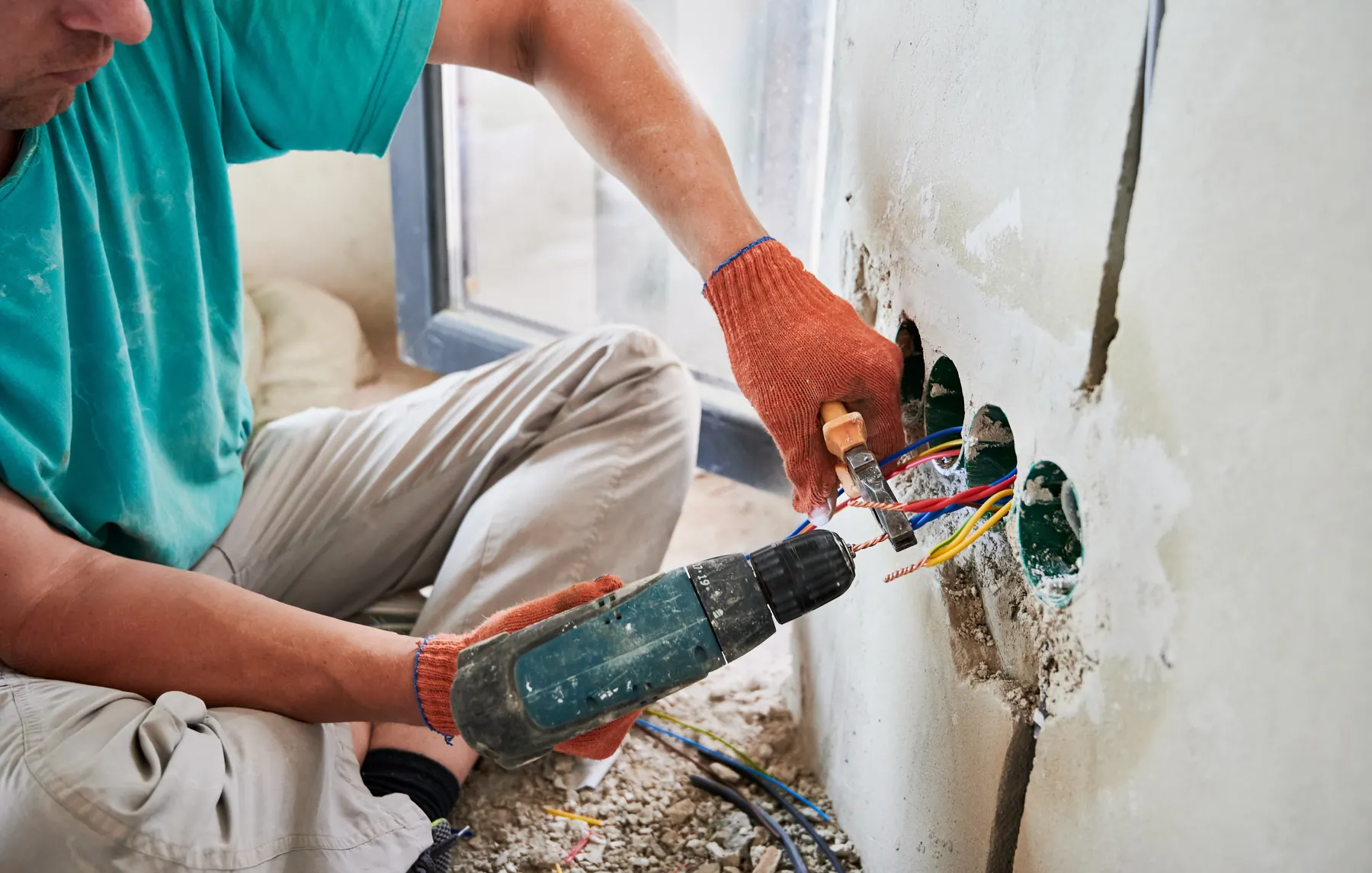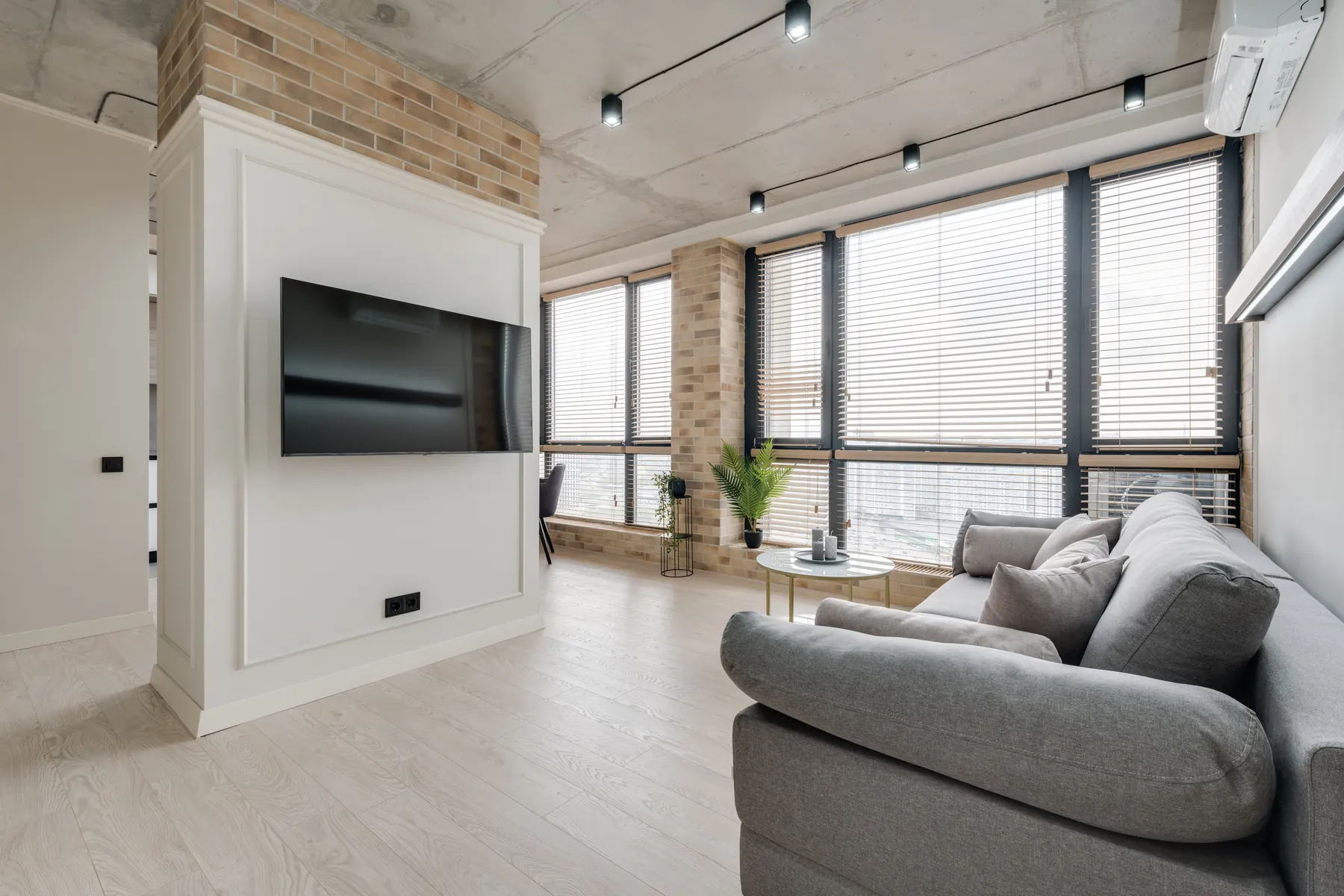
Masonry is a different job, and the wrong anchor is how screens fall.
Brick, block, poured concrete and stone fireplace walls, with the fixings those walls actually need rather than the ones in the box.
Condo and older stock
Why the screws in the box do not work here
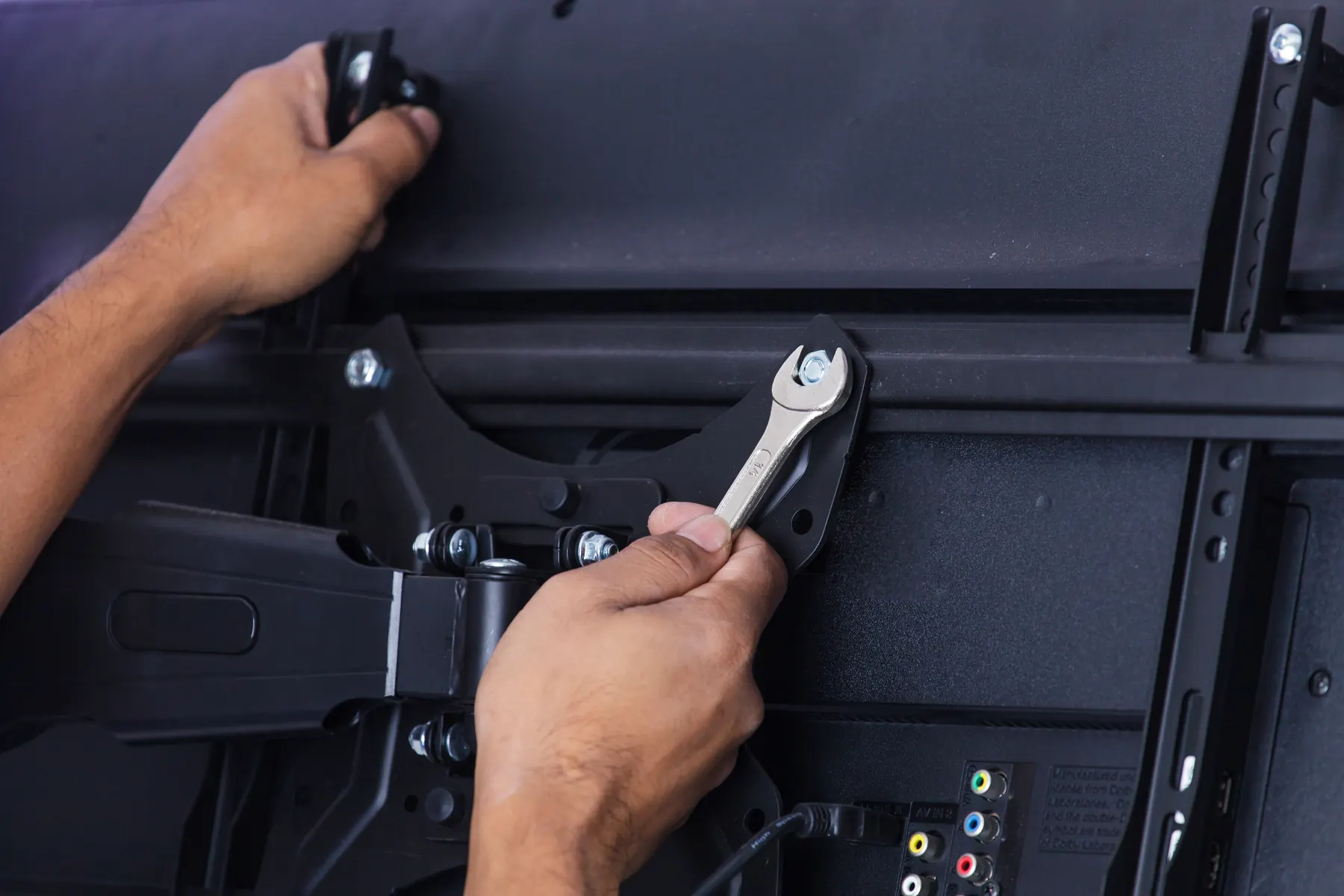
Every bracket arrives with a bag of plugs and screws, and they are sized for the easiest wall the maker could imagine. Masonry is not that wall. Brick, block and concrete take sleeve or wedge anchors, set into a hole drilled to full depth and expanded against the material so the load goes into the wall rather than into a plastic plug.
Where the anchor lands matters as much as what it is. We drill into the body of the brick, not the mortar joint. Joints are softer, they are inconsistent from one property to the next, and in older GTA stock a lime joint can simply crumble out around a fixing. Drilling too close to a brick edge is the other way to lose an anchor, because the corner spalls away and the grip goes with it.
Hollow block is the one that catches people. A masonry bit breaks through the face shell into a void, and an anchor that expands into thin air holds nothing. Those walls want a fixing that spreads behind the shell or sets into the solid webs between the cells, and knowing which you have means drilling a test hole and reading what comes out of it. Poured concrete, which is most condo walls here, is the opposite. It is hard work to drill and it is the most dependable wall in the city once the anchors are in.
Fireplaces, stone and heat
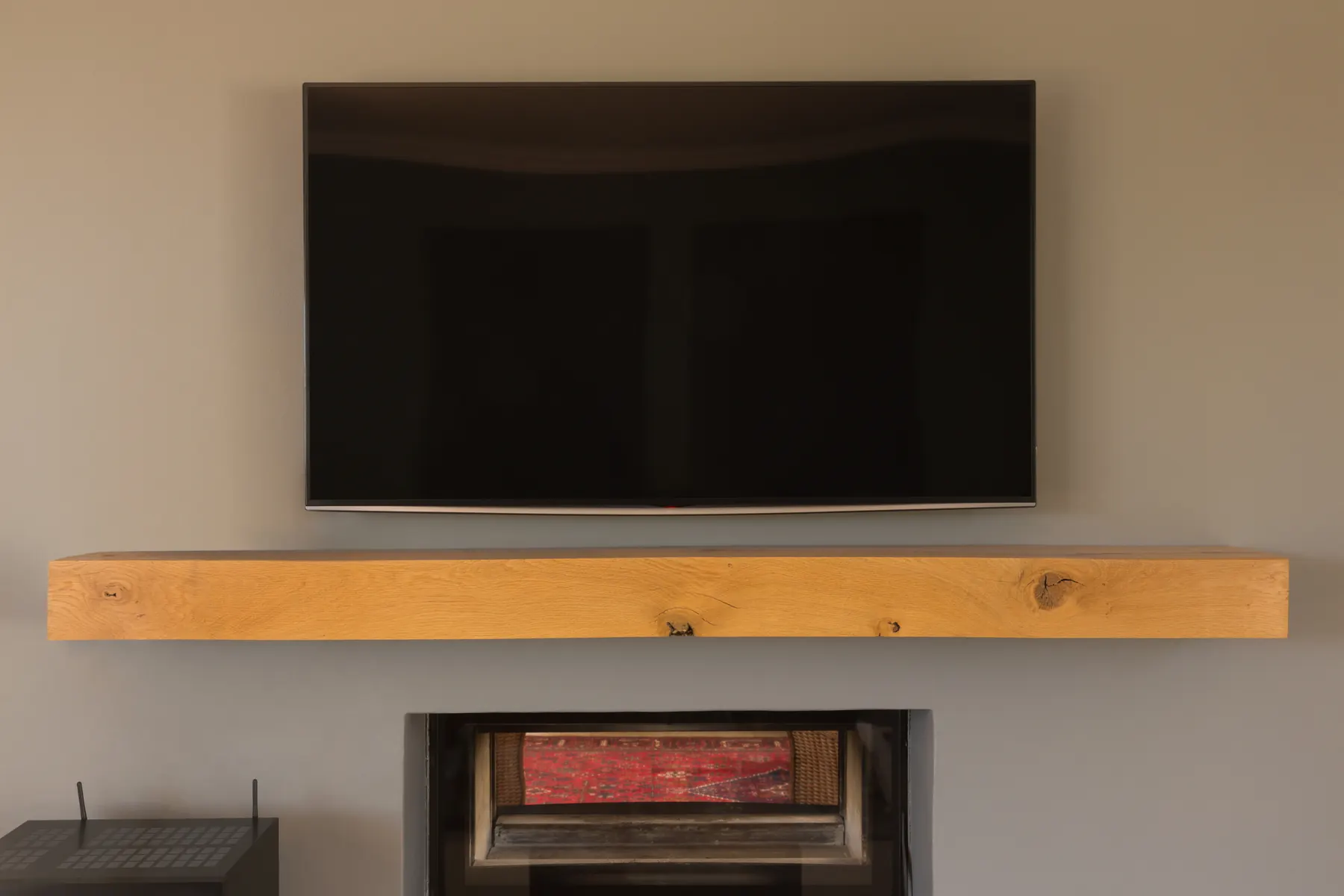
Chimney breasts are the most requested mount and the most misread. Some are solid masonry. Plenty are a stud and board breast clad in slips or panelling, with brick only above or beside the screen, which looks identical once it is painted. Fixing a full motion arm into a panel that has nothing behind it is a slow failure rather than an instant one.
Stone needs the same suspicion. Natural stone cladding is often thin and bonded to a backing board, so the anchor has less to bite than the wall suggests.
Then heat. Above a working firebox the air rises warmer than people expect, and screen makers state an ambient limit. We check that before mounting rather than discovering it in January, and where the wall is right but the heat is wrong we will say so and offer somewhere else in the room.
Tell us the building and the wall and we will bring the fixings for it. The quote is agreed before anyone drills.
How it goes
The order of work.
Identify the wall
Brick, hollow block, poured concrete, stone or a clad false breast all feel similar under paint and behave nothing alike. A test hole and the dust that comes out of it tell us which one we have.
Choose the anchor
Sleeve or wedge anchors sized to the screen and the bracket, never the plugs and screws that came in the bracket box.
Drill on hammer, clear the hole
Carbide bit, correct diameter, drilled to depth and square to the face, then the dust blown out so the anchor grips the full length of the hole.
Set, torque and hang
Anchors set and tightened to the bracket maker figures, rail checked level, then the screen lifted on by two people where the size needs it.
Should the anchor go in the brick or the mortar joint?
The brick, nearly always. Mortar is softer, it varies wildly between one house and the next, and old lime joints can crumble out around a fixing. We set anchors in the solid body of the brick and keep well away from the edges so nothing spalls off.
My condo wall is concrete. Is that harder?
It is easier to trust and harder to drill. Poured concrete takes a wedge anchor and holds a screen better than any stud wall will. Allow for the noise and the dust, and check whether your building wants the service lift booked and insurance on file.
Can you mount above a stone fireplace?
Usually, with two checks first. Stone cladding is sometimes thin and stuck to a board with a void behind it, which will not take an anchor, and the air above a working firebox can get hotter than the screen maker allows.