Free tool, no email
TV mounting height calculator.
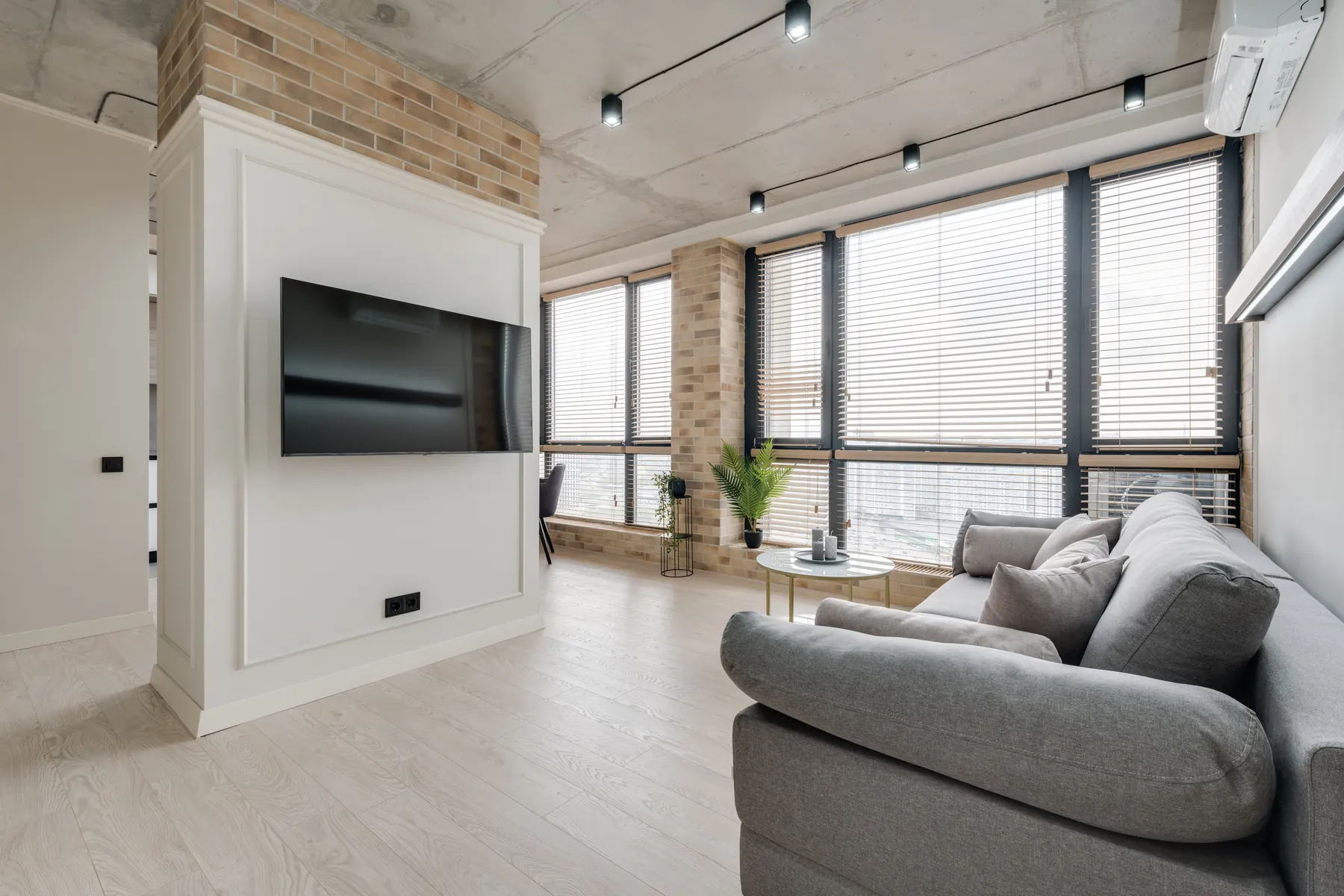
Mount the centre of the screen at your seated eye height, which for most adults on a standard sofa is 40 to 44 inches from the floor. Put in your screen size and your eye height below and this works out the centre line, the bottom edge, the viewing angle and, if something is in the way, the tilt that cancels it.
Nothing is sent anywhere. The arithmetic runs in your browser.
Step one
Your numbers, not a rule of thumb.
Mark the centre line at
42.0 in
107 cm from the floor
Bottom edge
26.1 in
66 cm
Top edge
57.9 in
147 cm
Screen is
56.6 x 31.9 in
width by height, 16:9
Downward tilt needed
None
The centre sits at eye level, so a flat mount is right.
Your screen fills
29 degrees
of your field of view
The email opens in your own mail app with the figures filled in. Attach a photo of the wall taken straight on and we can usually tell you what it needs before we arrive.
Step two
Mark the centre, not the bracket.
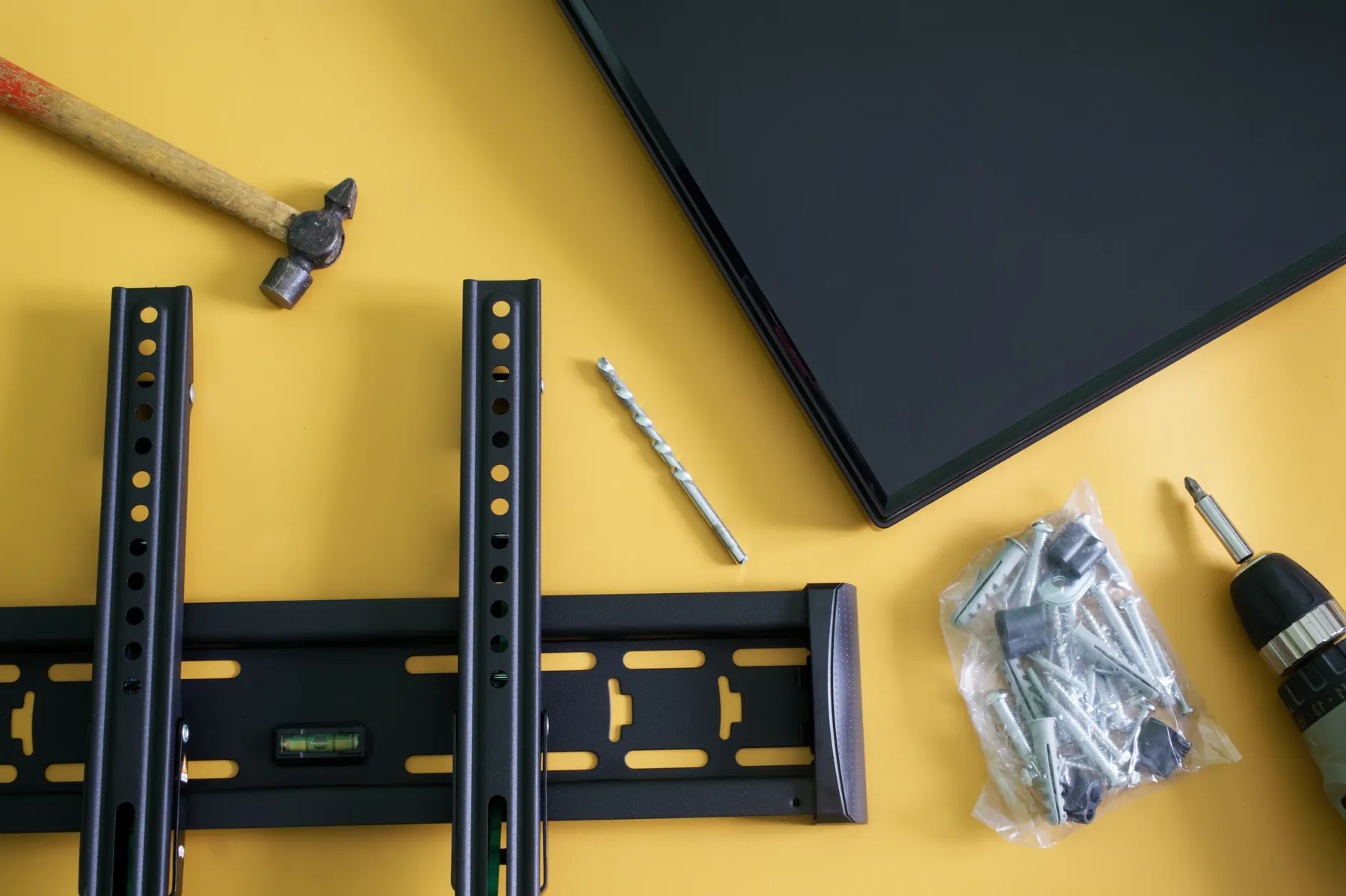
- The centre line is the only fixed number. Bottom edge and bracket hole positions change with every screen and every bracket. Centre height does not, so pencil that line first and work out from it.
- Half the screen height, twice. Up from the centre line is the top edge, down is the bottom. The calculator above has both, which is what stops a 75 inch panel ending up where a 55 was planned.
- Wall plates hang below their holes. Most brackets put the top fixing above the centre of the screen. Hold the plate against your pencil line and mark through the holes rather than measuring to them.
- Then find the structure. The line tells you where you want to drill. The wall decides whether you can. That is the next tool.
Step three
What is your wall made of?
Three observations anybody can make in about two minutes, and the answer tells you which fixing the wall needs. The screws in the bracket box suit one wall out of six.
Answer the first question and the verdict appears here.

The arithmetic
Where these numbers come from.
Screen height
A 16:9 panel is 0.490 times its diagonal tall and 0.872 times its diagonal wide, from the geometry of the ratio itself. Bezels add a little to the outside dimension, so the figures above describe the picture, which is what you are aligning to your eye.
Centre at eye level
The centre of the picture goes at seated eye height. Every inch it sits above that is an inch your neck carries for the length of a film. This is also why centre height, not bottom edge, is the number worth marking.
The tilt
Tilt is plain trigonometry: the rise of the centre above eye level, divided by the viewing distance, as an angle. Twenty inches of rise at nine feet is about ten degrees. Past roughly fifteen degrees a tilting plate stops being the right tool and a pull down arm starts.
Viewing angle
The angle figure is how much of your field of view the screen fills. THX aims for 36 to 40 degrees. SMPTE treats 30 degrees as the minimum for a cinema. On a 4K panel that is roughly 1.2 to 1.6 times the diagonal as a seating distance.
Heights, angles and distances only. This tool does not quote, and there is no price anywhere on this site, because what a job costs depends on the wall and we tell you the figure before anyone drills.
Asked about the numbers
Three that come up every time.
What height should the centre of a TV be?
At your seated eye height, which for most adults on a standard sofa is 40 to 44 inches from the floor. Centre height is the number that holds true across screen sizes; the bottom edge moves every time the diagonal changes.
How much tilt does a TV above a fireplace need?
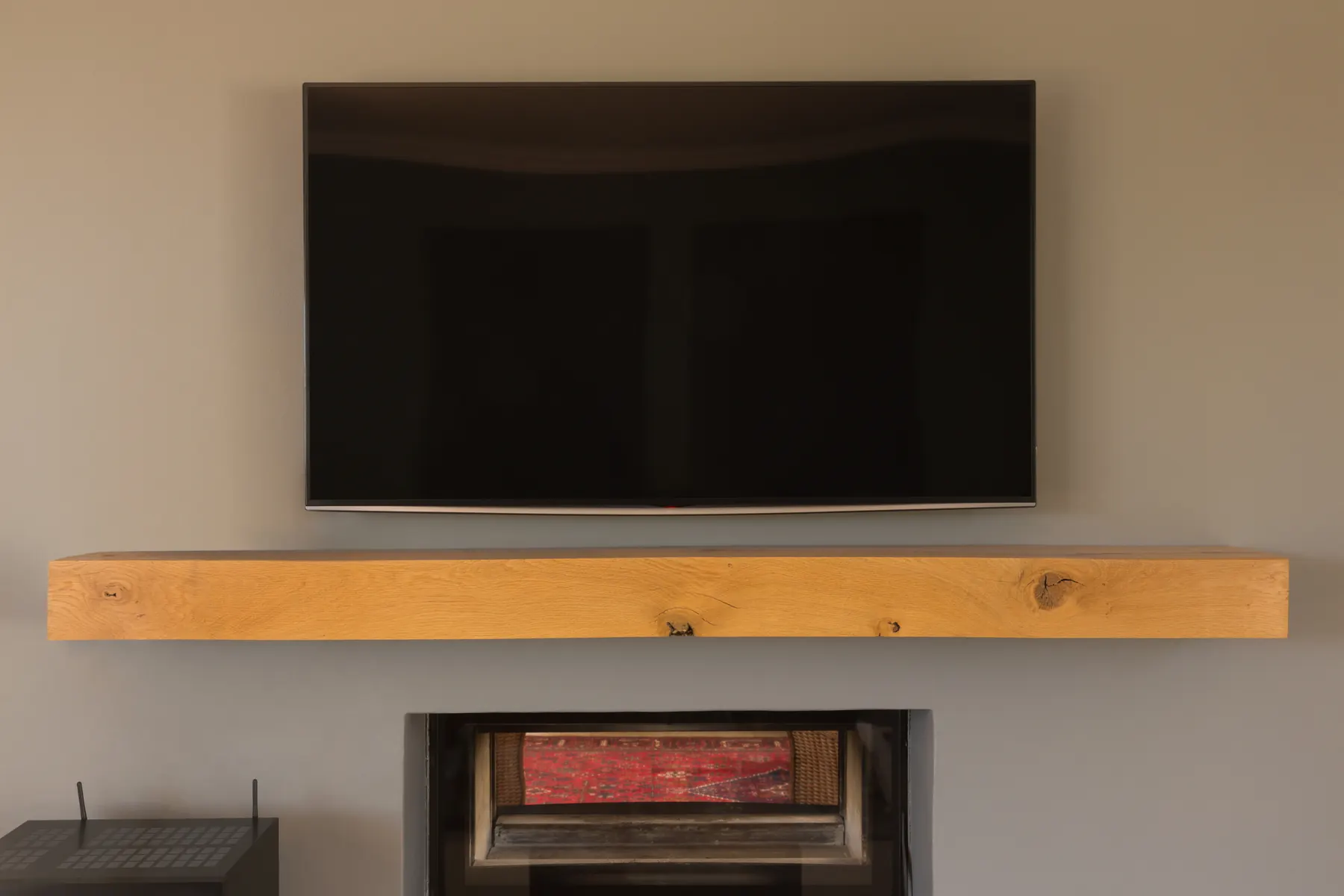
Enough to cancel the rise above eye level at your distance. A centre 20 inches above eye level at nine feet needs about ten degrees. Past fifteen, a pull down arm beats a tilting plate, because tilt alone starts to distort the picture from below.
How far should you sit from a 65 inch TV?
Between about 6.5 and 8.5 feet, by the THX and SMPTE angles above. Closer fills more of your view, which is the point of a large screen, and on a 4K panel you will not see the pixels at that distance.
More of them on the questions page, and the long version of the height answer in how high should a TV be mounted. If the calculator told you a mantel is forcing the screen too high, that is its own job: mounting above a fireplace. If the screen is a Samsung Frame or an LG Gallery set, the cable route has to be settled before anything goes on the wall, which is flush mounting.