What does TV mounting cost in Toronto?
Nobody can quote a screen they have not seen. What anyone can do is tell you which five things move the number, and why each one moves it.
Five things set the price of a TV mounting job: the size and weight of the screen, what the wall is made of, the type of bracket, whether the cables go inside the wall, and how easy the spot is to reach. Everything else is detail. Change one of those five and the quote moves.
We do not publish a figure, and you should be careful with anyone who does without seeing your wall. What we can do is explain what each of those five things costs an installer in time and in materials, so that when a quote arrives you can tell whether it makes sense.
Screen size and weight
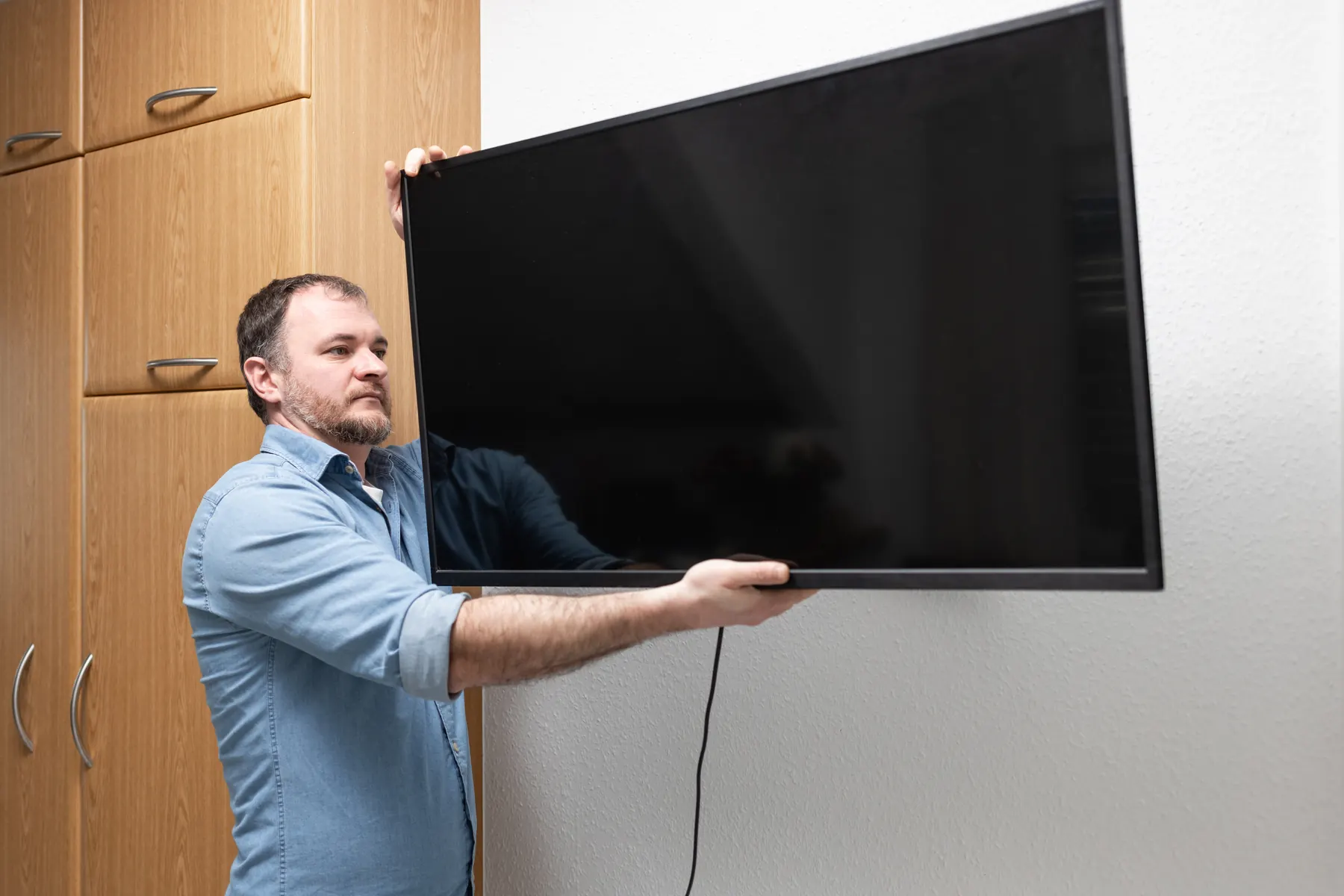
Size drives two costs. The first is labour: past a certain point one person cannot safely hold a panel against a wall and start a bolt at the same time, so the job needs two, and two people for an hour costs what two people cost. The second is hardware. A bracket rated for a large screen is a heavier casting with longer bolts, and the fixings into the wall step up with it.
Weight matters more than the diagonal. Two screens of the same size can differ by a lot depending on panel type and age. The number in the manual is the one the bracket has to be rated for.
What the wall is made of
This is the factor people forget and the one that changes the most. Drywall over timber studs is the cheap case. A stud finder, two lag bolts into solid timber, done. Drywall over steel studs is slower, because steel gives a bolt nothing to bite and the fix is either toggles rated for the load or a plywood backing plate spanning several studs.
Brick, block and poured concrete are slower again. Masonry bits wear out, the dust has to be controlled, and every hole is drilled with a hammer drill into something that fights back. Sleeve or wedge anchors cost more than a bag of woodscrews. A condo wall that turns out to be concrete rather than stud is the single most common reason a job takes longer than the person booking it expected.
The bracket
A fixed plate is the simplest thing in the trade. It holds the screen flat to the wall, it pulls almost straight down, and it goes up fast. A tilting mount is barely more work. A full motion arm is a different job: the casting is heavier, the wall plate is bigger, and every inch the arm extends multiplies the pull on the top fixings. That means better fixings, more of them, and more care about what they land in.
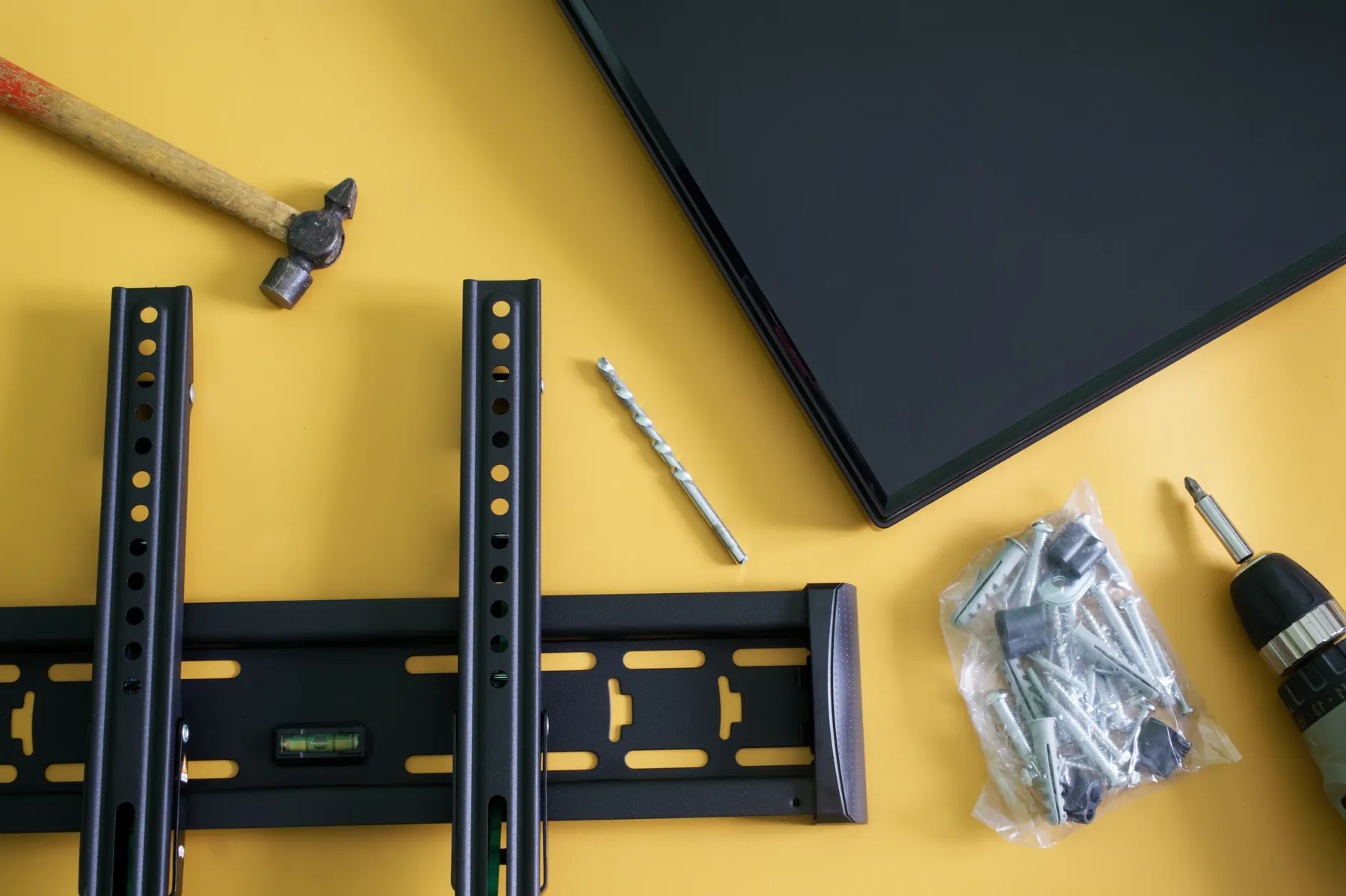
If you already own a bracket, say so, because it comes off the bill as a material. It has to match the VESA pattern on the back of your set and be rated for the weight, and a supermarket bracket on a large panel is not a saving.
Whether the cables go inside the wall
Leaving the cables visible costs nothing extra. Tidying them into paintable trunking costs a little. Putting them inside the wall is a second job bolted onto the first, and it is the line item that surprises people most.
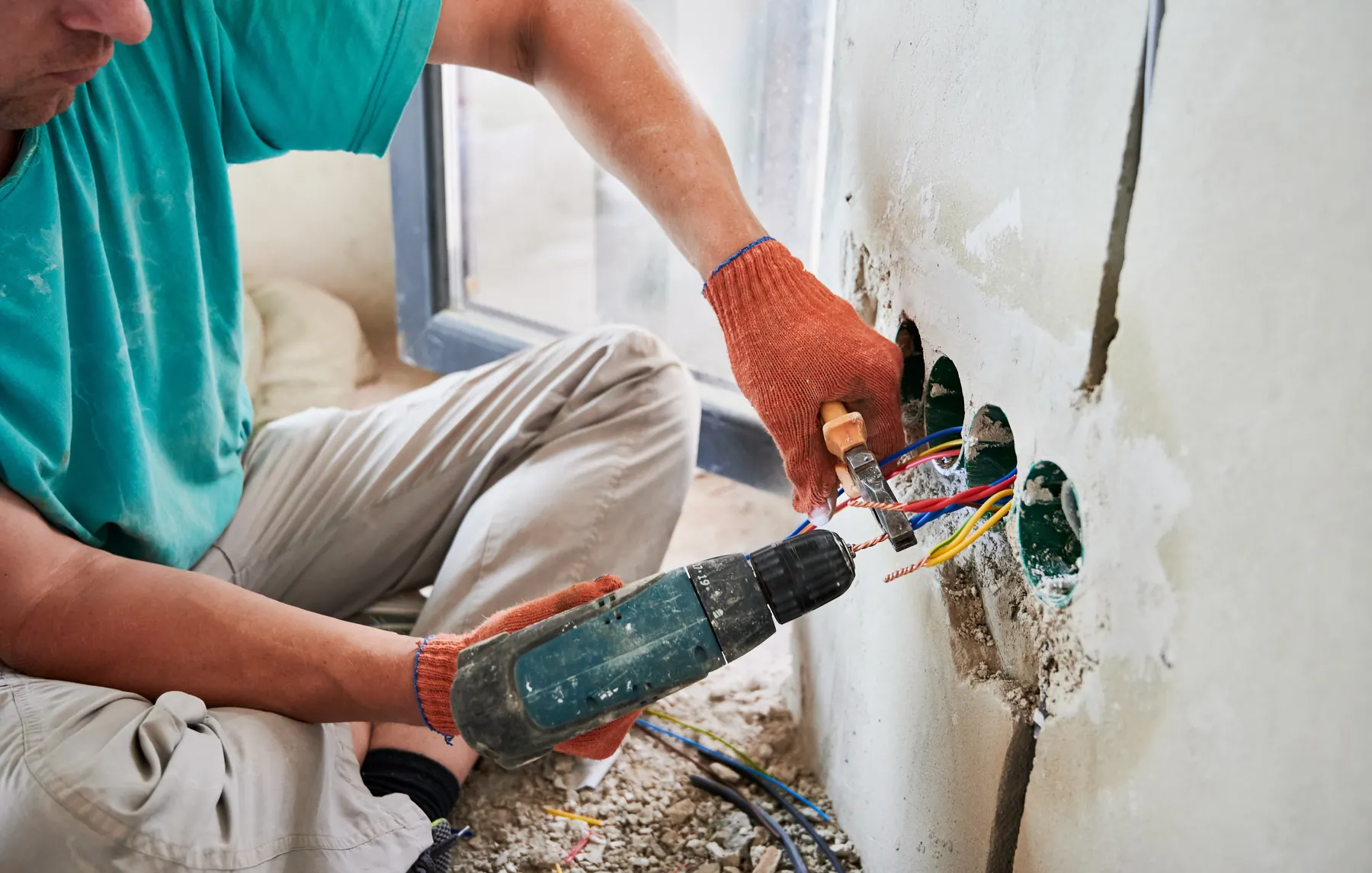
Inside a hollow stud wall it means cutting two openings, fishing the cables down the cavity past any noggin in the way, fitting plates top and bottom and making good. Power is its own question. Low voltage cable can usually live in the cavity. Mains generally cannot be run loose, so a screen with no outlet behind it needs a proper one put there, and that is electrical work with its own rules. On solid masonry there is no cavity at all, so the choice is a chased channel and a replastered wall, or trunking.
Access
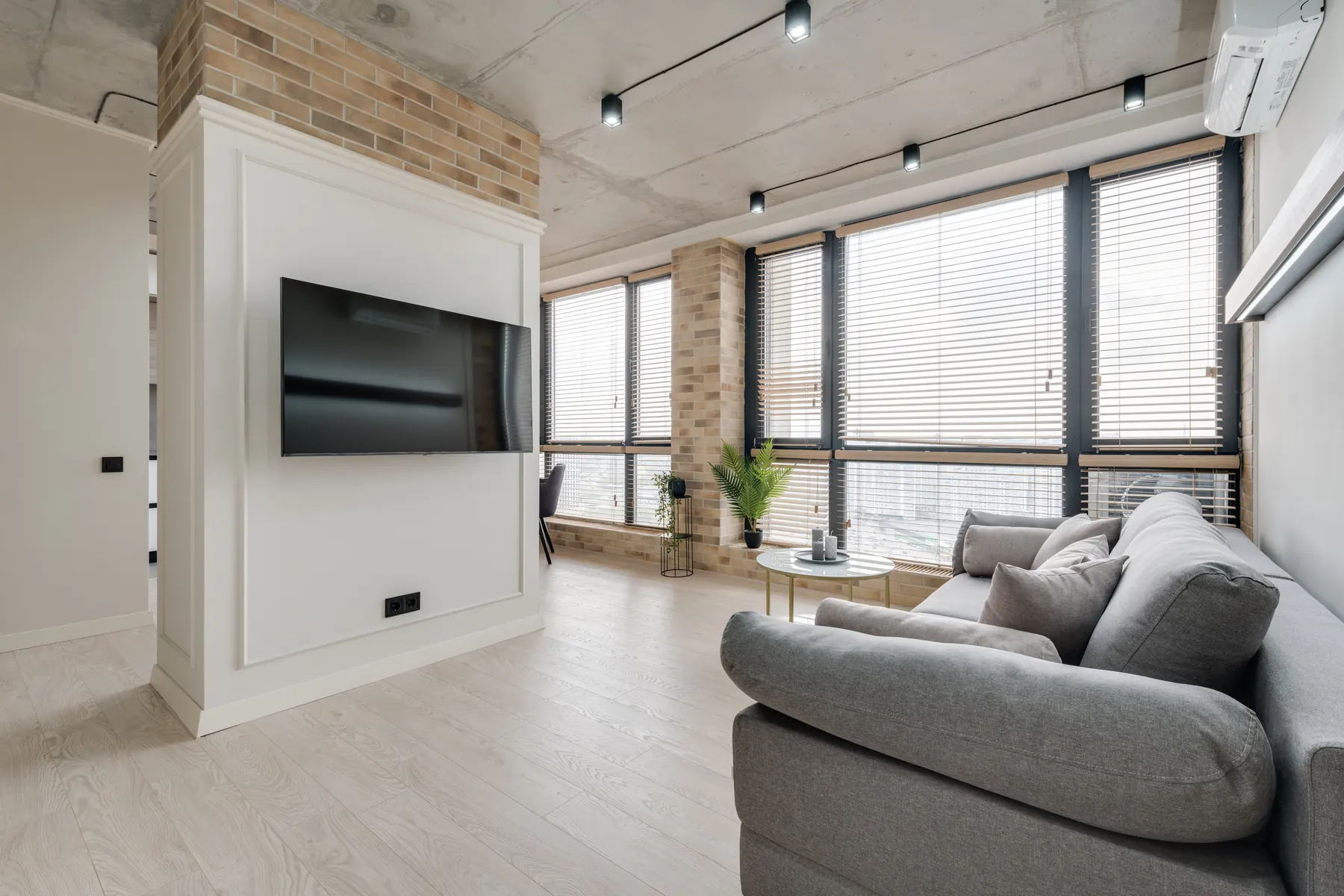
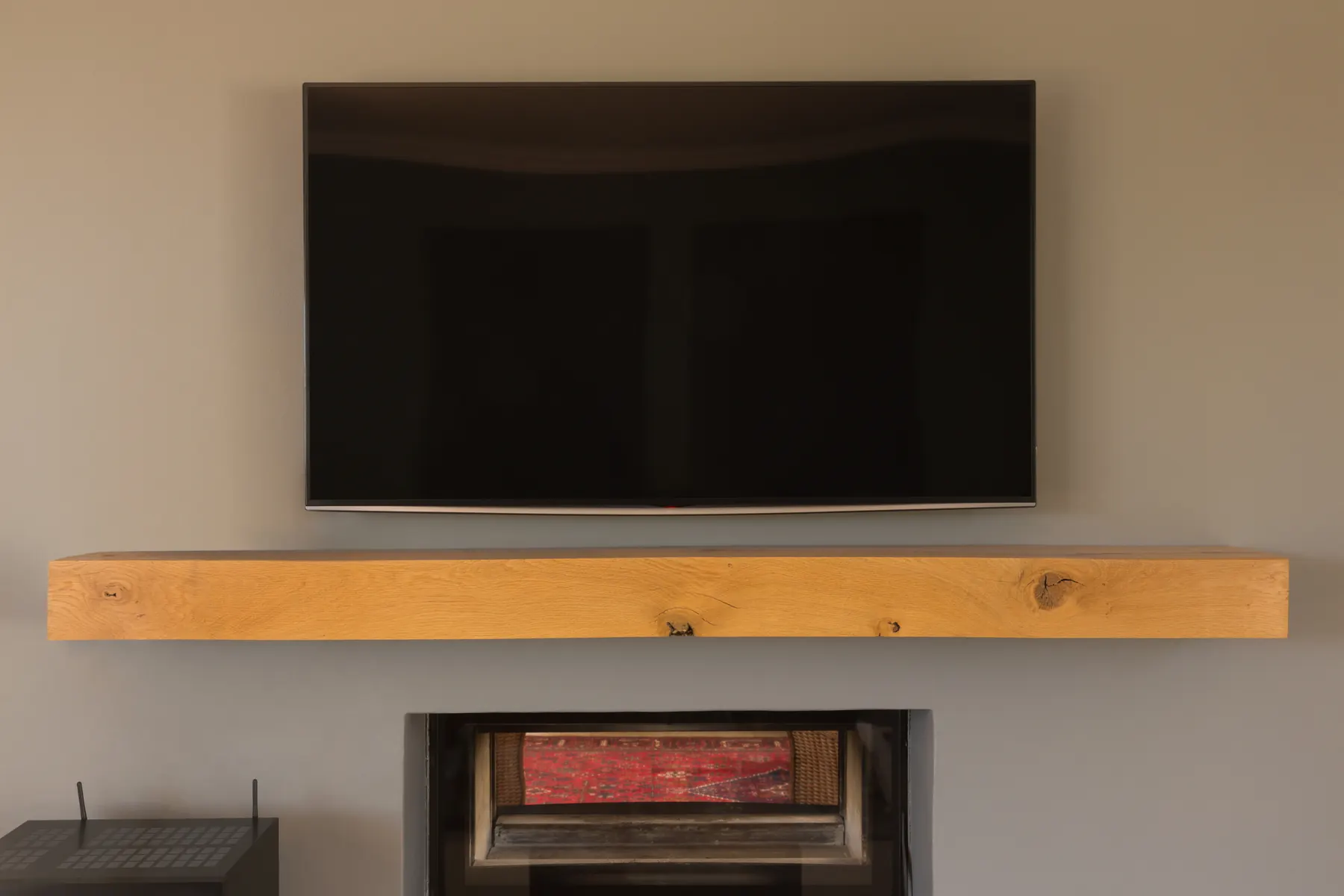
The last one is the dull one, and it still moves the number. A screen going on a plain wall in a ground floor living room is quick. The same screen above a fireplace means working off the hearth with a mantel in the way. A tall wall means a platform. A condo means parking, a loading bay, a booked service lift and sometimes a certificate of insurance lodged with the building before anyone comes up. None of that is installation, and all of it is time.
Why a headline price is the cheapest job on the list
When you see a single low figure advertised, work out what job it describes. It is almost always the easiest one available: a small screen, a fixed plate, timber studs, cables left showing, and a wall you can stand in front of. That job exists and there is nothing wrong with the figure.
Your job differs from it the moment any one of the five changes. A bigger screen brings a second pair of hands. Concrete brings different anchors. An arm brings better fixings. Cables inside the wall bring making good. None of that is an upsell, it is a different piece of work.
What to send to get a firm number
Four things, and a firm quote comes back without anyone visiting:
- The make and model of the television. That gives us the weight and the VESA pattern.
- The screen size, if the model number does not make it obvious.
- A photograph of the wall taken straight on, from far enough back to show the whole wall and the furniture under it.
- Whether there is a power outlet behind where the screen will go.
That is enough to price the work. Book online or call 289-475-5175 and describe the wall. The quote comes before the work, and it does not move afterwards.