Should you mount a TV yourself?
There is a version of this job you should absolutely do yourself, and a version where the cheapest outcome is paying somebody else to do it.
Sometimes, yes. A small screen on a timber stud wall, on a fixed plate, with the cables left on show, is a fair weekend job for anyone competent with a drill and a stud finder. Masonry, fireplaces, large screens on arms, steel studs and cables inside the wall are where it stops being that.
When doing it yourself is fine
We are not going to pretend otherwise. If the screen is small, the wall is drywall over timber studs, the bracket is a fixed plate or a simple tilt, and you are happy to see the cables, this is a straightforward afternoon.
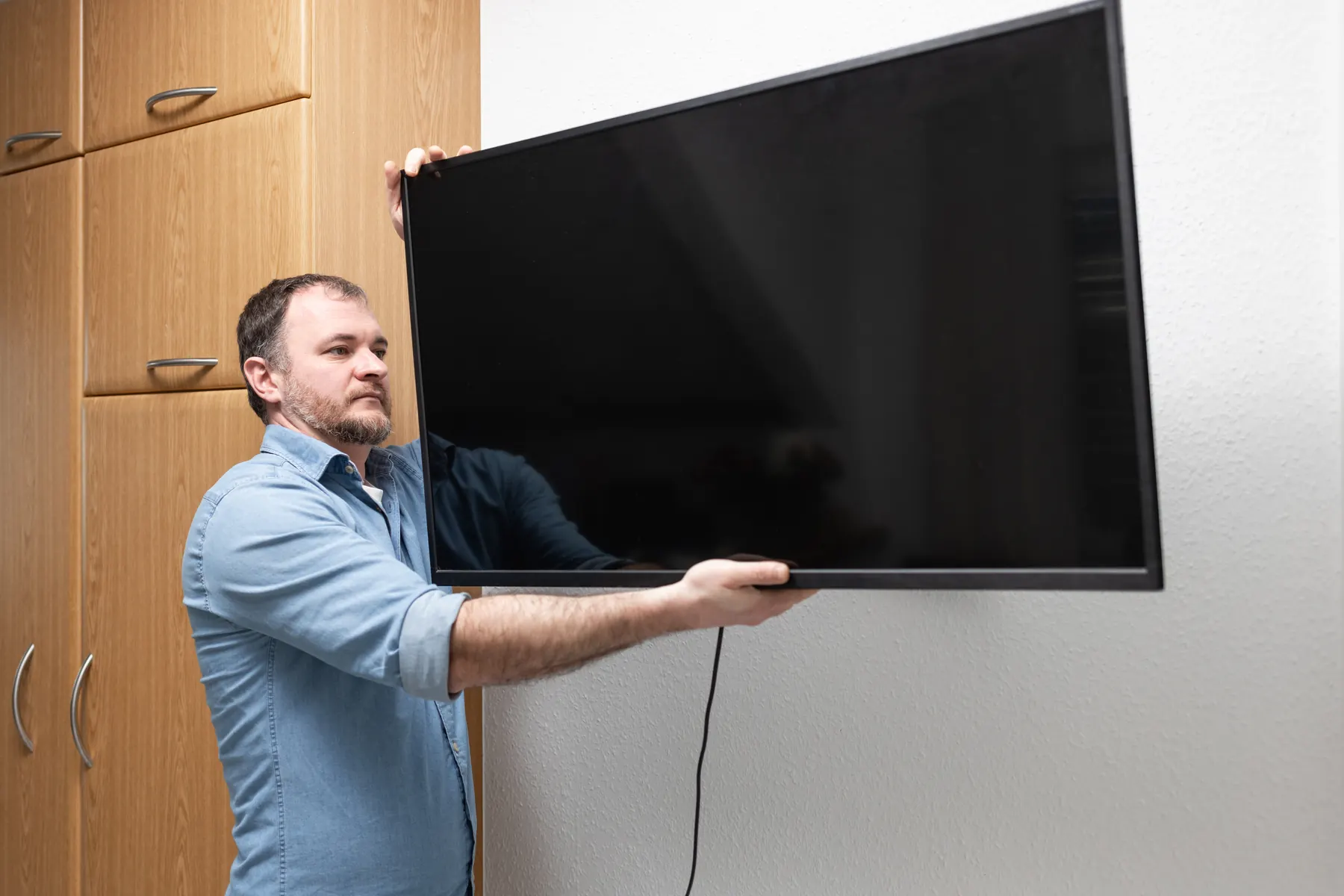
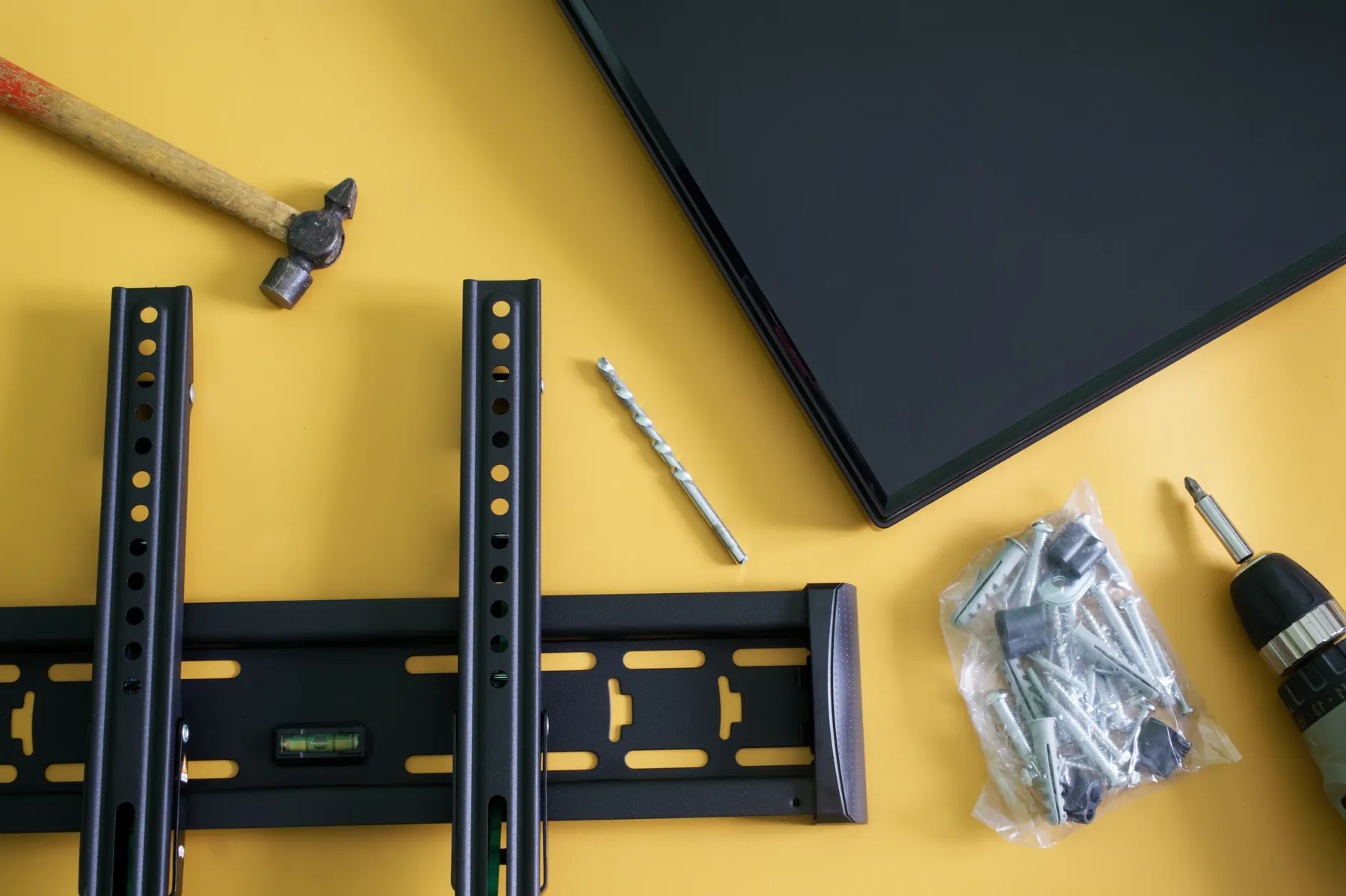
The method is not a secret either. Find the studs with a finder and confirm them with a small pilot hole. Mark the centre line of the screen at seated eye level, not at standing eye level. Hold the rail where it goes, check it level in both directions, and drive lag bolts into the middle of at least two studs. Bolt the arms to the VESA holes on the back of the set, plug the cables in before it goes up, then hang it and check the level again with the weight on.
Do that properly and nobody would know who did it.
The tools this needs
A cordless drill is not the whole kit. You need a stud finder you trust, or the patience to find studs with a magnet and a fine nail. A spirit level longer than your hand. A socket or a driver for lag bolts, because a screwdriver will not get them into timber. A tape measure and a pencil. For masonry, a hammer drill and the right masonry bits, and a vacuum held at the hole unless you want the dust through the room. If you are buying all of that for one screen, price the tools honestly before you decide.
Where it stops being a DIY job
Each of these changes the work, not just the difficulty.
Masonry and concrete. Brick, block and poured concrete need sleeve or wedge anchors set to the right depth in a hole drilled with a hammer drill, and the screws in the bracket box are not those. Get the depth or the hole size wrong in concrete and the anchor spins, which leaves you drilling a second hole next to a useless first one in a wall you cannot patch invisibly.
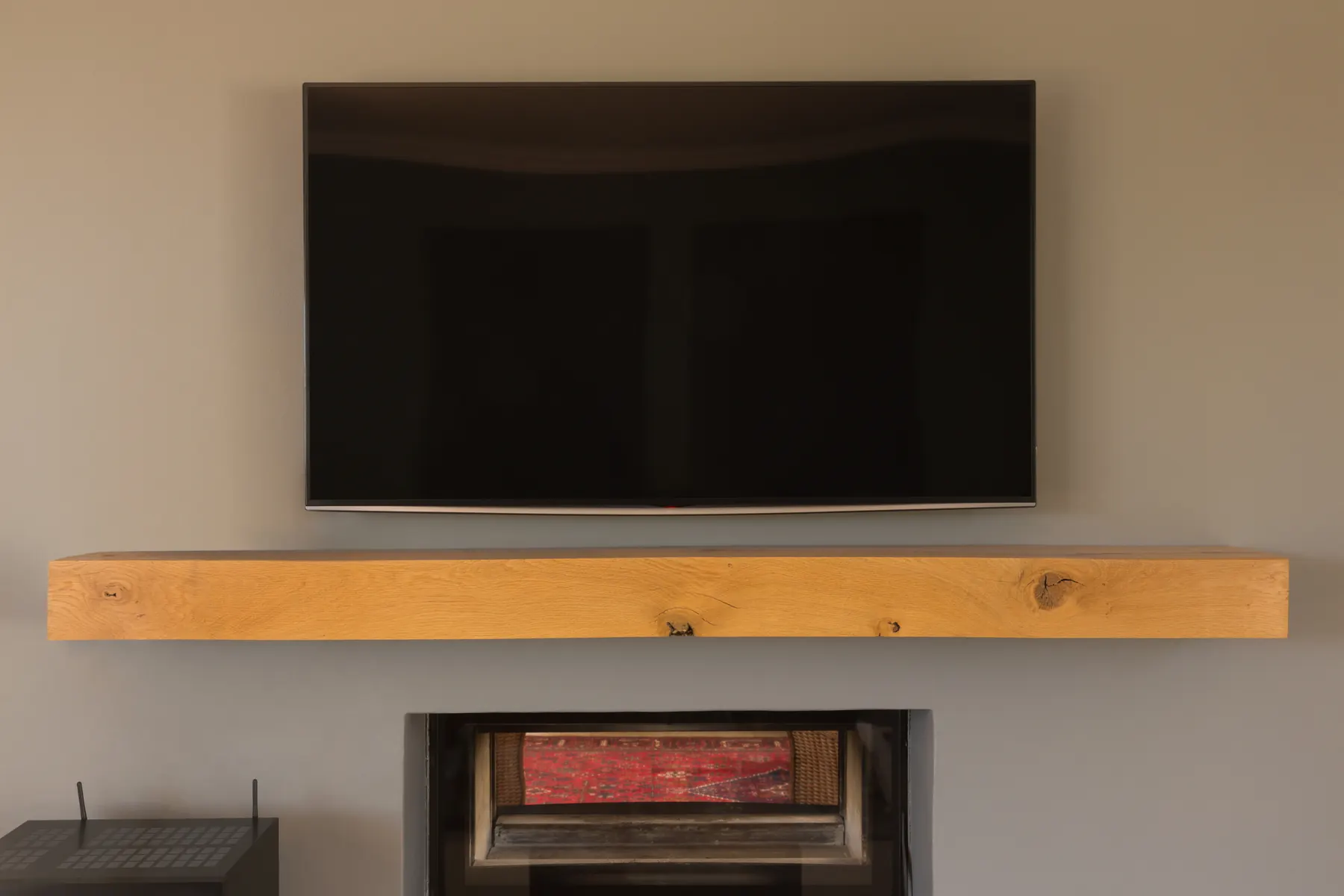
Anything above a fireplace. Two separate problems. The fixing has to go into the masonry rather than into a mantel or a decorative panel, and the air above a working firebox can get hotter than the set is rated for. That second one is not visible on the day. It shows up as a failure months later.
Full motion arms on large screens. The arm multiplies the pull on the top fixings every inch it extends. This is the combination where DIY goes wrong most expensively, because it holds fine on the day it goes up.
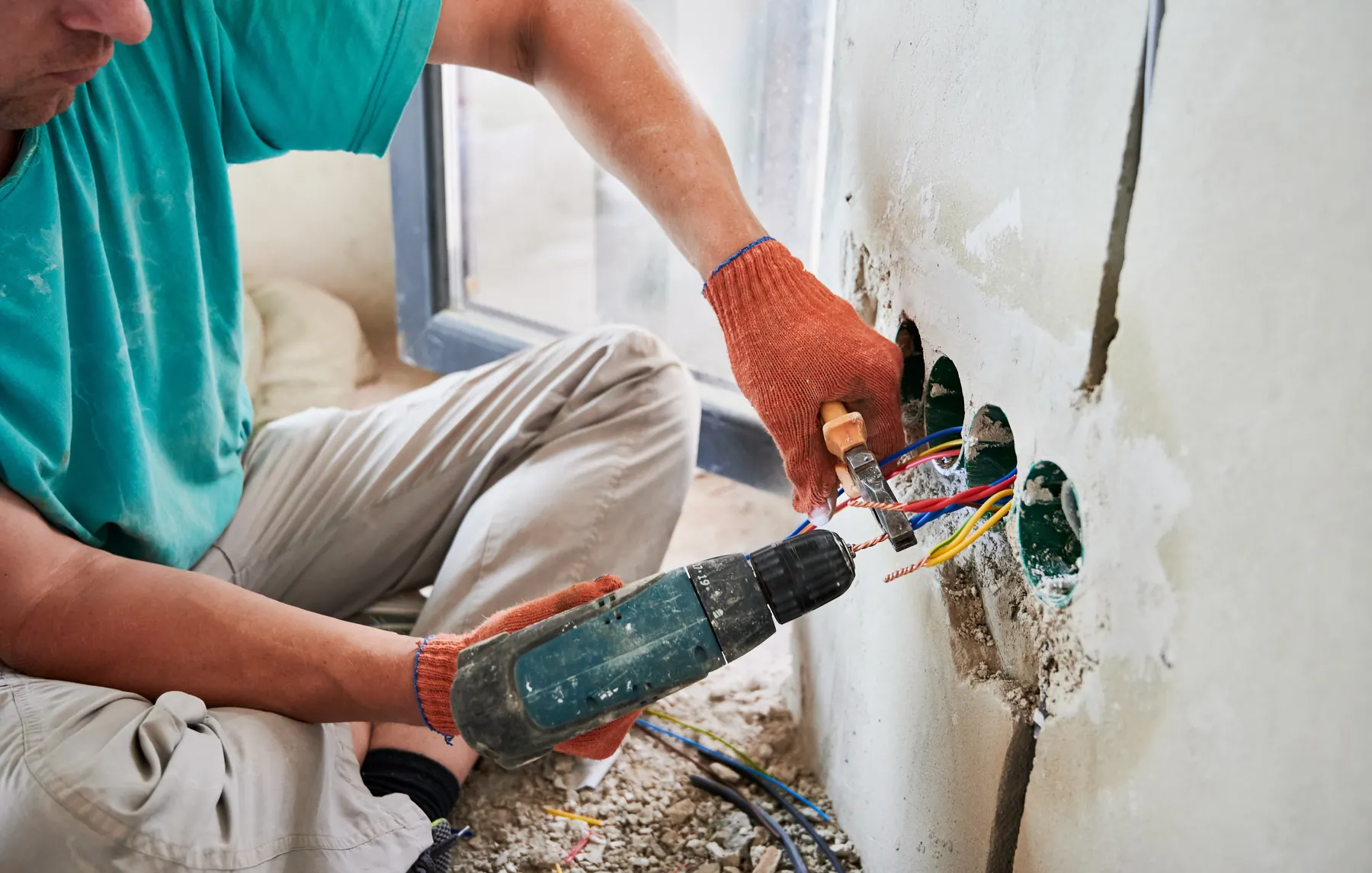
Cables inside the wall. Low voltage cable can usually run in a cavity. Mains cannot be run loose, so moving power behind a screen is electrical work with rules attached, and a cable stapled into a stud or run alongside mains is a fault you have built into the house.
Steel studs. They look like timber on a stud finder and behave nothing like it. A lag bolt has nothing to bite.
Anything where a mistake means a screen on the floor. If you are not sure, that is the answer.
What it costs to get wrong
Nobody budgets for the failure case, so here it is in plain terms. A screen that comes off the wall is rarely repairable, and the panel is most of the value of the set. It usually lands on whatever is underneath: a sideboard, a console, a games machine, a coffee table. A fixing that tears out of plasterboard does not leave a hole you fill, it leaves a cone of broken board that needs a patch, tape, filler and paint across a wall that will not match.
Then there are the ones that cost nothing to fix and sting anyway. Holes an inch off the line, drilled and abandoned. A bracket centred on the stud you found rather than on the wall, so the screen is not in the middle of the chimney breast. A set at standing height that you will look up at for years, because the holes are in and nobody wants to drill again.
Weigh that against the cost of a quote, which you can get before anything happens.
A reasonable middle
There is a version of this where you do some of it. Buy the bracket, read the manual, find the studs, mark your height with the sofa where it will live, and get a quote for the bit you do not want to own: the concrete, the fireplace, the arm, or the cables inside the wall. Nobody here will talk you out of hanging a small screen on a stud wall. Call 289-475-5175, describe the wall and the set, and you will get a straight answer about which half of this page you are in.