Hiding TV cables, and what is actually allowed
There are two cables behind a television and only one of them is allowed to disappear into the wall on its own.
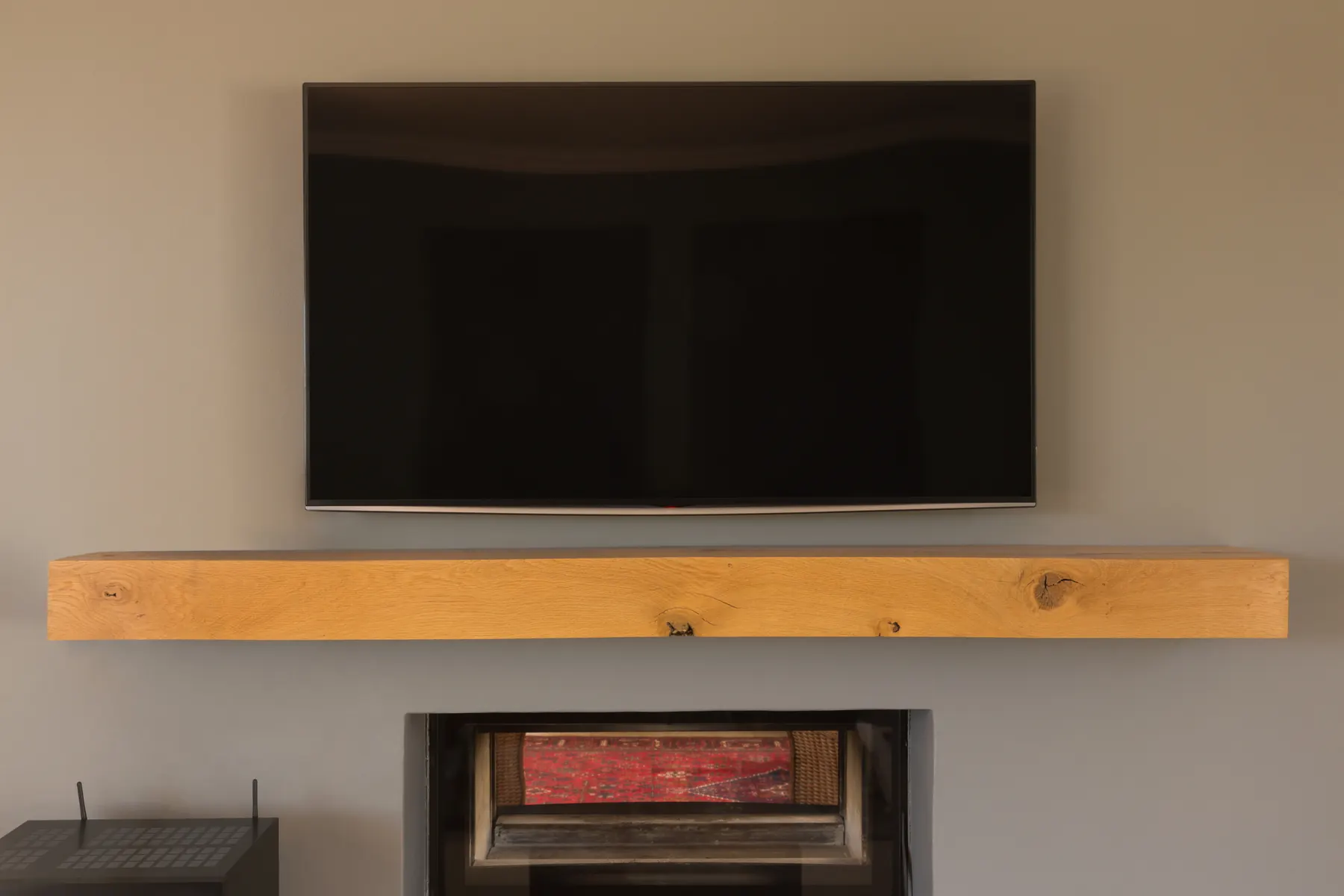
A mounted screen with two cables dangling under it is the detail that makes the whole job look amateur. Getting rid of them is usually straightforward, but it is not one task. There are two different cables behind a television, they are governed by two different sets of rules, and only one of them is allowed to disappear into the wall on its own.
Two cables, two sets of rules
Behind every wall mounted set there is signal and there is power. Signal is HDMI, optical, coaxial, network cable, speaker wire. All of it is low voltage, it carries no shock risk worth speaking of, and the electrical code treats it as a separate class of wiring. Power is the mains lead, and mains is where the rules get strict, because a cable inside a wall can be hit by a nail, crushed by a fixing, or left somewhere nobody can ever inspect it.
Low voltage can usually go in the cavity
On a hollow stud wall, running HDMI and coax inside the cavity is normal work. Two low voltage brush plates or open mud rings, one behind the screen and one behind the media unit, a draw through the void between them, and the cables are gone. Nothing is buried permanently, because a cable can be pulled back out through a brush plate and replaced when a new standard arrives.
Two things make it harder than it sounds. Stud walls often contain horizontal fire blocking partway up, which stops a straight drop and means drilling through the blocking or finding another route. And insulation in an external wall can make a drop almost impossible without opening the board. Interior walls are usually easier than exterior ones.
Mains power is not allowed to run loose
Here is the part that gets done wrong in a lot of homes. People take the power lead off the television, feed it through a hole in the drywall, and bring it out at the bottom near an existing socket. It is tidy and it is not permitted. A flexible appliance lead is not rated to be concealed in a wall cavity, it is not protected against a fixing, and it is not a connection anyone can inspect.
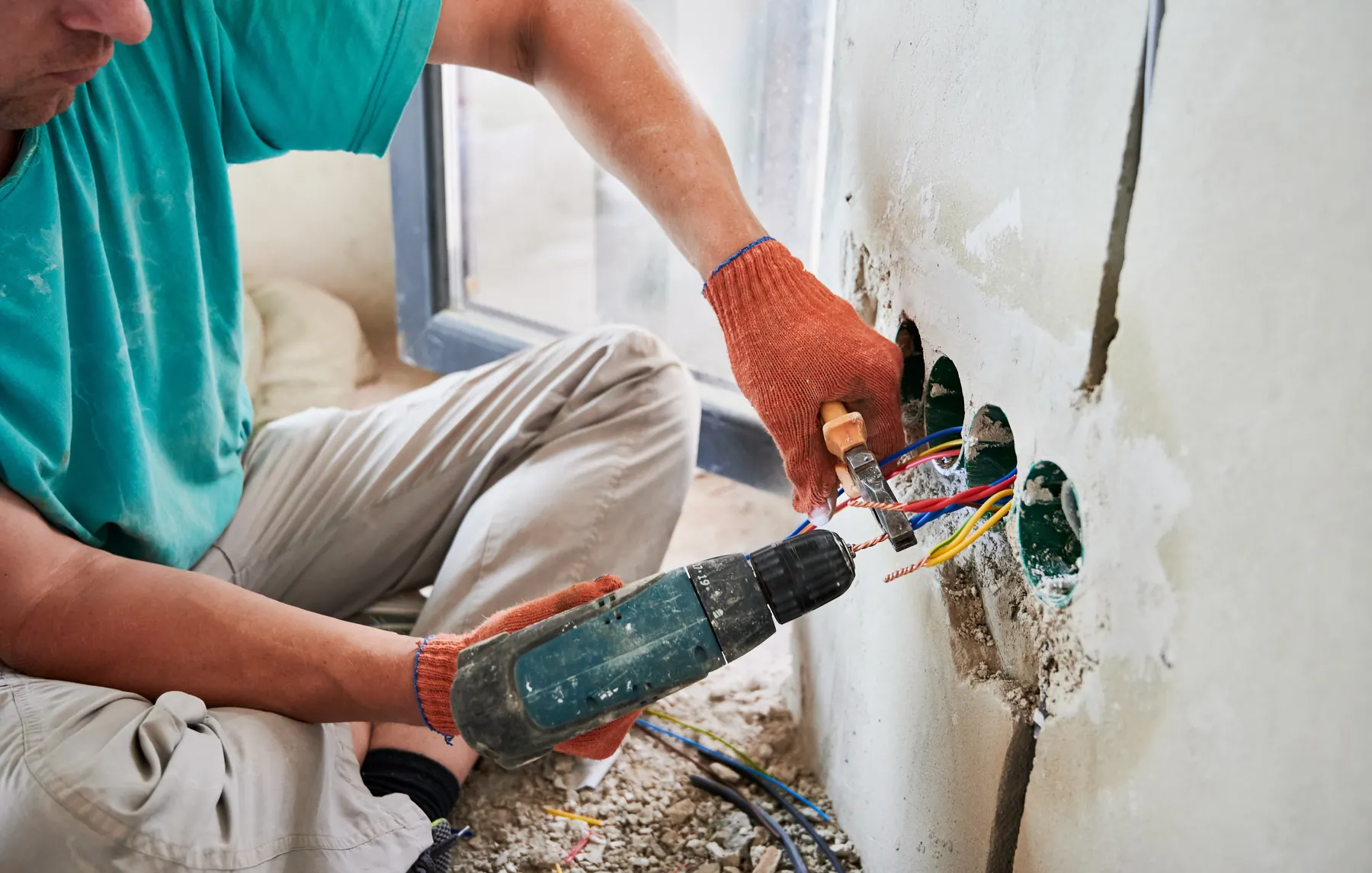
What is permitted is a proper outlet. An electrician runs cable rated for in wall use from an existing circuit and fits a receptacle behind the screen, in a box, terminated correctly. The television then plugs into a socket that happens to be hidden behind it, and the appliance lead is never inside the wall at all. That is also why the first fix stage of a renovation is the cheapest moment in the life of a house to decide where a television is going.
What an in wall power kit actually does
Hardware shops sell kits with two plates, a short length of cable and a pair of sockets, described as in wall power. They are legitimate products and they are widely misunderstood.
A typical kit is a pair of boxes joined by cable that is rated for in wall installation: an inlet near the floor that plugs into your existing socket, and an outlet behind the screen. The listed cable between them is the part that is allowed to be in the wall. Your television lead plugs in at the top, the short supplied lead plugs in at the bottom, and nothing unrated is concealed.
Read the instructions before buying one, because some kits are listed for a particular use, and some jurisdictions and inspectors take a stricter view than the box suggests. A kit also does not move the circuit, so everything still depends on a socket existing nearby.
When trunking is the honest answer
Some walls cannot take cables inside them. Solid concrete, solid brick, tile, a party wall, a rented flat where you are not allowed to cut anything, a finished room where nobody wants the board opened. In those cases the choice is between a visible cable and a paintable cable cover, and the cover wins every time. TV Installers will tell you which of the two your wall is before any work starts.
Modern trunking is a shallow channel with a clip on lid, fixed with adhesive or small screws, filled and painted to match the wall. From a sofa it reads as part of the wall. It is not a compromise anyone should apologise for. It keeps the cables protected, it keeps them accessible, and it does not involve cutting a chase into a structural wall to hide something that a strip of painted plastic hides just as well.