Fixed vs tilting vs full motion TV mounts
Three brackets, one wall. The real difference is not the price of the hardware, it is how much pull ends up on the top fixings.
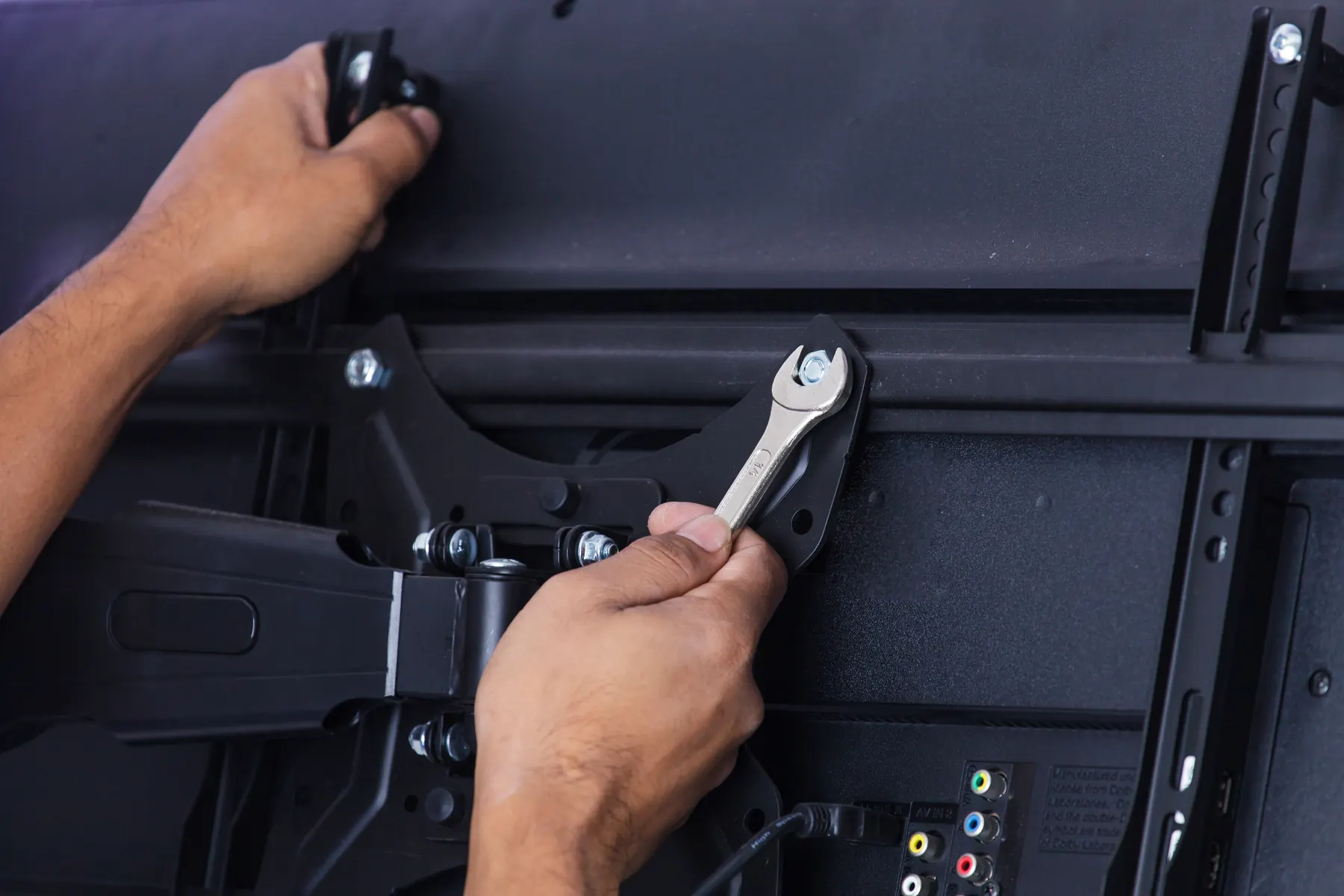
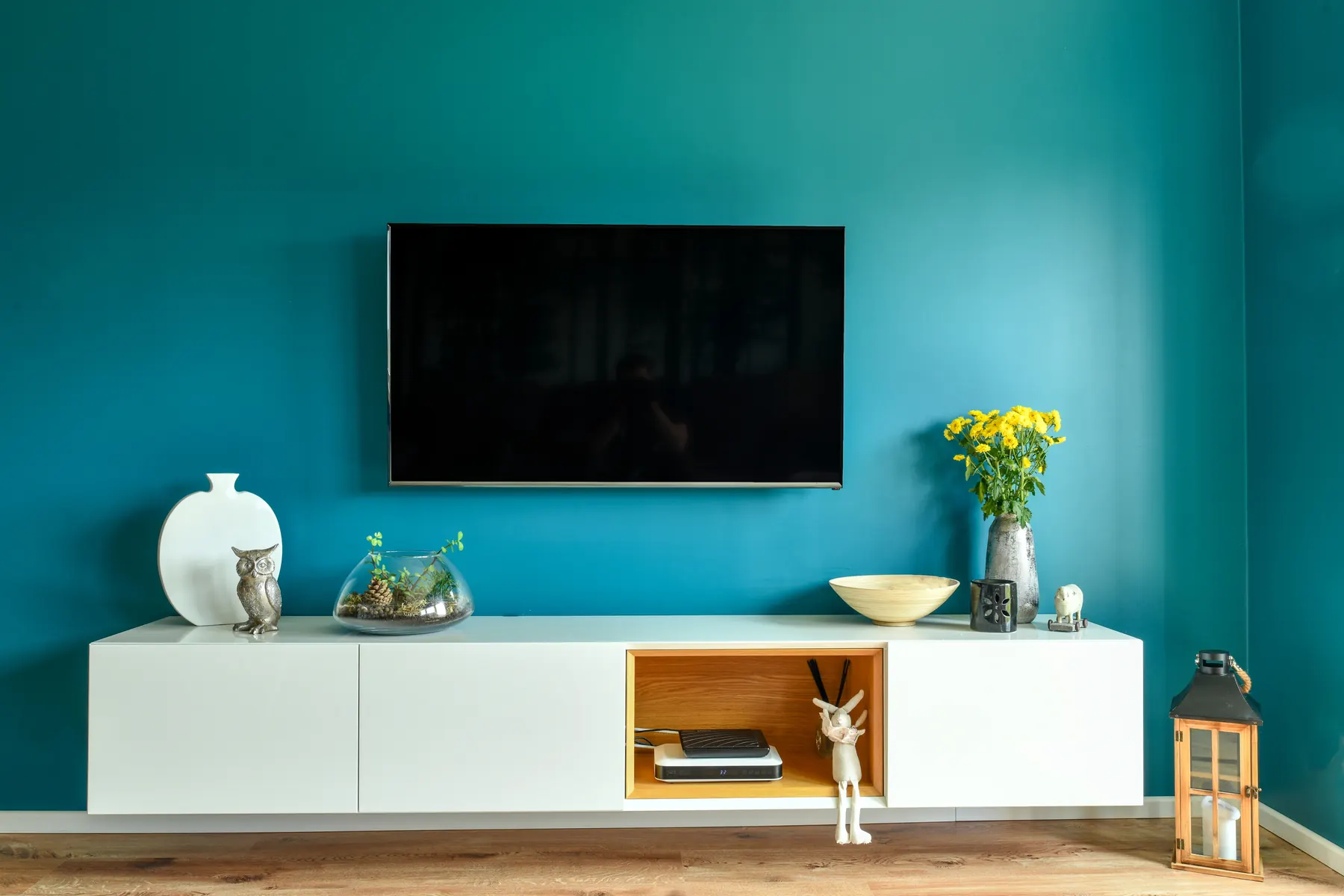
A fixed mount holds the screen flat to the wall and does not move. A tilting mount angles it down, usually by ten to fifteen degrees. A full motion arm pulls the screen out from the wall and swivels it. Most rooms are best served by the first or the second.
The three types are not three grades of the same product. They are three different pieces of engineering with different demands on the wall behind them, and the right one depends on where you sit rather than what you are willing to spend.
The three side by side
| Fixed | Tilting | Full motion | |
|---|---|---|---|
| How far off the wall | Closest to the wall | Just off the wall, slightly more than fixed | Folds in close, extends a long way out |
| Can you angle it | No | Down only | Down, left and right |
| Can you reach behind it | No | Barely | Yes |
| Load on the wall | Straight down, least demanding | About the same as fixed | Much higher pull on the top fixings when extended |
| Cost, relative | Lowest | A little more | Highest, in bracket and in fixings |
| Who it suits | One seating position at the right height | Screens above eye level, or glare from a window | Corners, kitchens, two seating positions |
Fixed mounts
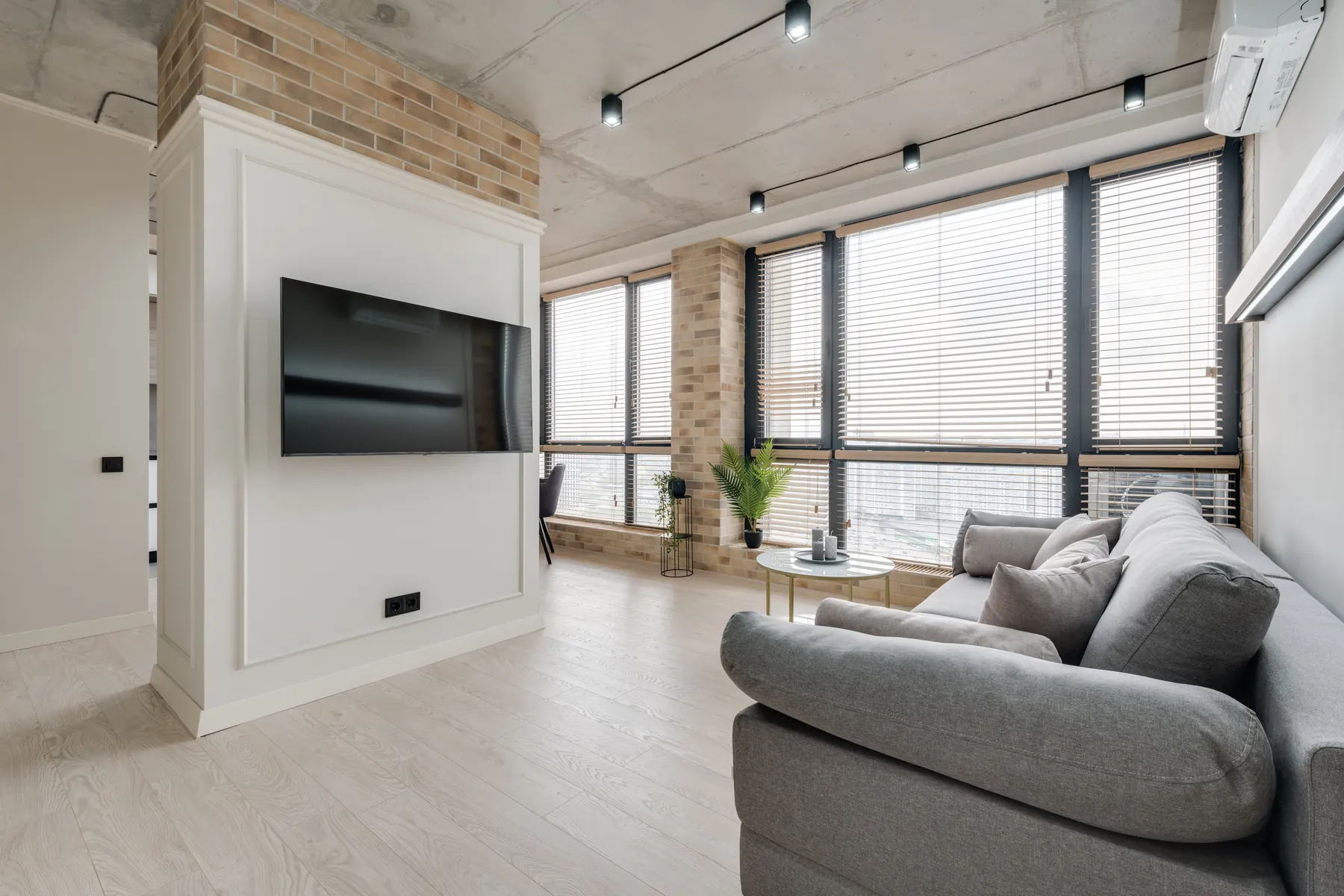
A fixed plate is two pieces of steel: a rail on the wall and arms on the back of the set. The screen hangs flat and close, it pulls almost straight down on the fixings, and there is nothing to work loose later. Nothing to adjust also means nothing to rattle.
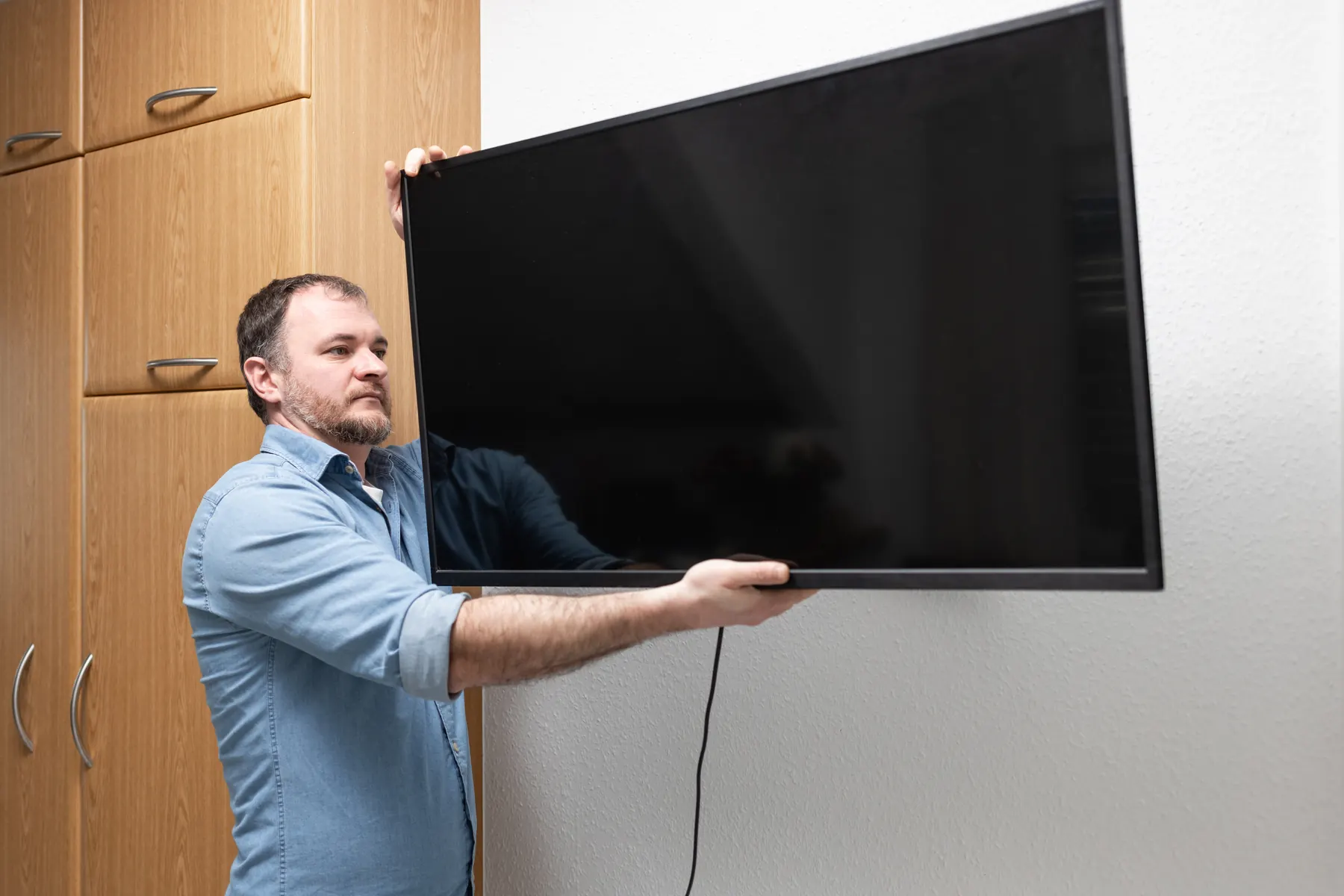
The catch is that everything has to be right before you drill. Height, centre line, level. There is no fixing it afterwards by tweaking the angle. The other catch is access: once a screen is flat to the wall you cannot get a hand behind it, so the cables have to be plugged in and dressed as it goes up.
Tilting mounts
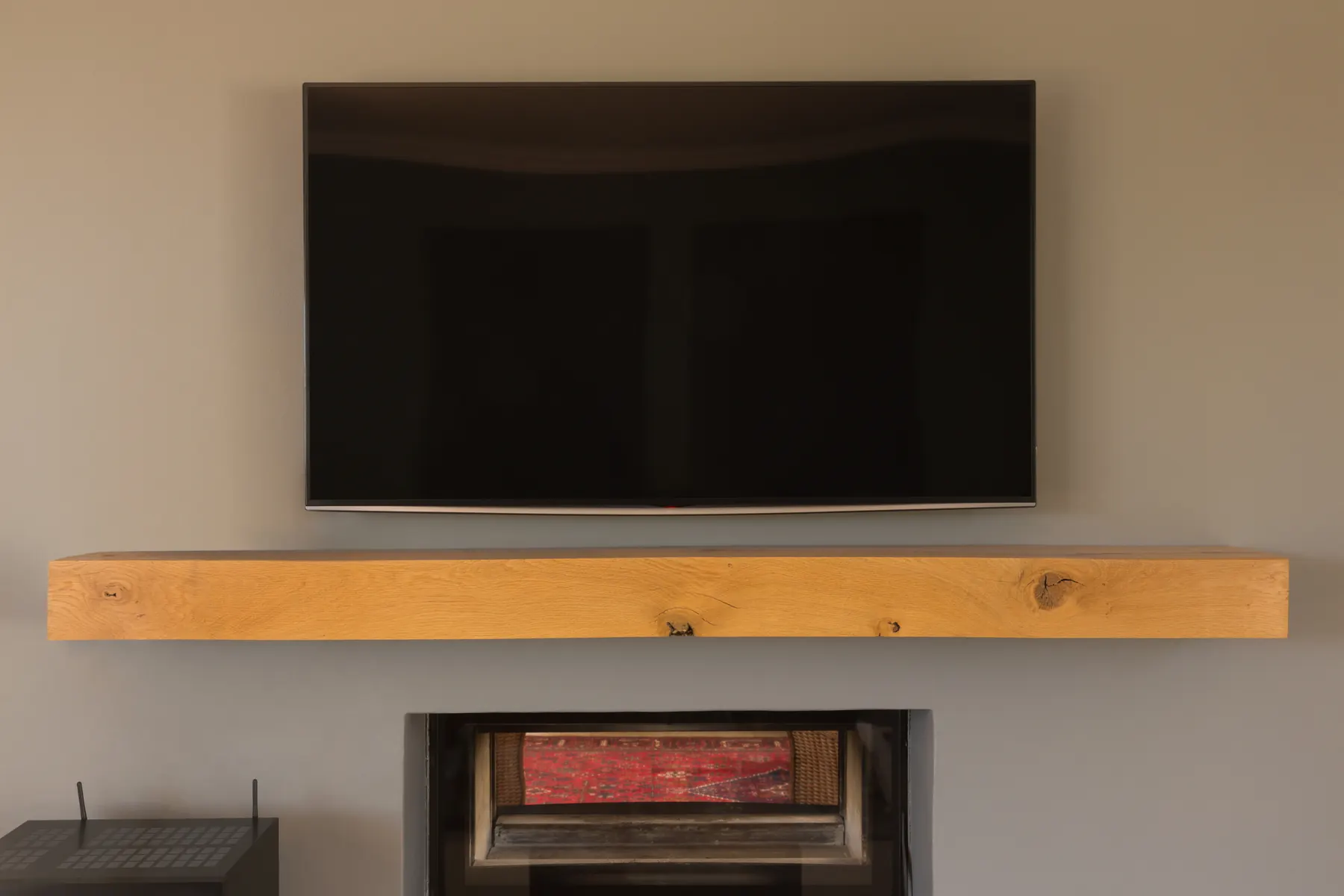
A tilt is the quiet default for anything that has ended up higher than seated eye level, which is most screens above a mantel and a good many in bedrooms. Angling the panel down points the picture at your face and keeps the ceiling light from bouncing off it. On panels that lose black level off axis, it also makes the picture visibly better.
What a tilt does not do is lower the screen. It aims the picture, it does not move it. If you have a choice about the height, take the height and the fixed plate. If the height is set by the room, take the tilt.
Full motion arms, and the honest version
Here is the opinion. Most people who buy a full motion arm move the screen twice, during the first week, and then never touch it again. The arm folds back against the wall and spends the rest of its life doing the job a fixed plate would have done for less money and with less hardware on the wall.
There are rooms where an arm is the right answer and they are easy to recognise. A screen in a corner that has to face into the room. A kitchen where you watch from the hob and from the table. An open plan room with two seating positions that are nowhere near each other. A set that genuinely needs a hand behind it because the inputs face sideways into nothing.
If that is not your room, the arm is paying for travel you will not use, and it is asking more of your wall at the same time.
What the arm does to the fixings
This is the part the box does not explain. A fixed plate holds the weight a couple of inches from the wall, so the load is close to straight down. Extend an arm and the same weight is now acting a long way out from the fixings. The top bolts are being pulled out of the wall rather than down it, and the further the screen travels the harder that pull gets.
So the wall has to be better. On timber studs that means lag bolts into the centre of at least two of them, not anchors in plasterboard. On steel studs it usually means toggles rated for the load or a plywood backing plate. On concrete or brick it means proper sleeve or wedge anchors set to depth. A drywall anchor holding a large screen on an extended arm is not a fixing, it is a delay.
Choosing, in one paragraph
Sit in the seat you watch from and look at the wall. If the screen can go at the height your eyes are at, and you watch from one place, buy a fixed plate and spend the difference on getting the cables out of sight. If the screen has to go higher than that, buy a tilt. If you genuinely watch from two places that are not near each other, buy the arm and tell whoever is fitting it, because the wall behind it needs planning rather than hoping. Call 289-475-5175 with the model and the wall and we will tell you which of the three your room is.