Can you mount a TV on a concrete condo wall?
Poured concrete is a better wall to hang a screen on than drywall. It is also the wall that punishes the wrong drill and the wrong anchor.
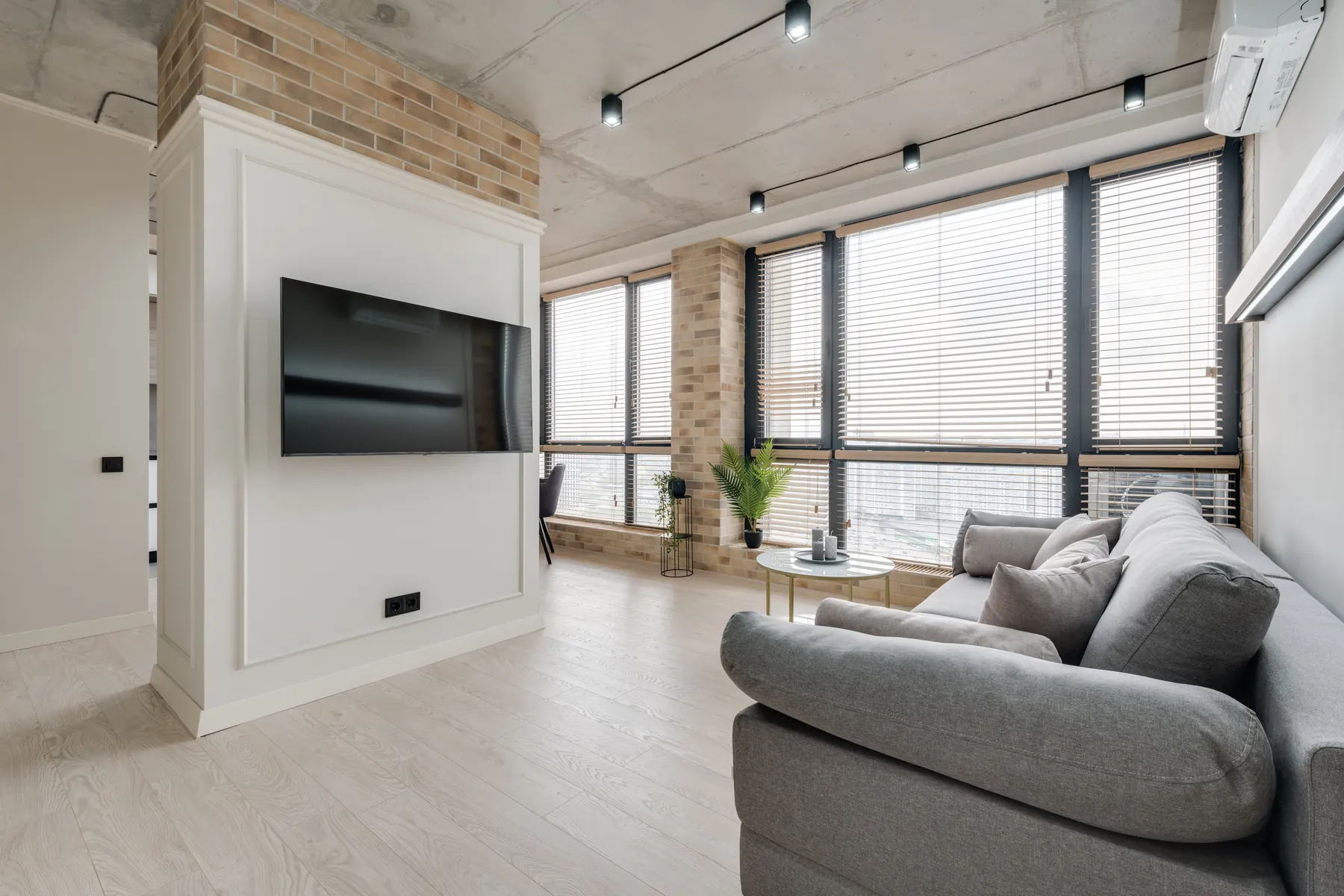
Yes. A poured concrete wall will hold a television better than almost anything else in a condo, and most people who ask the question are expecting the opposite answer. Concrete is not the problem. The problem is that concrete does not forgive the wrong drill, the wrong anchor, or a hole drilled somewhere it should not have been.
Concrete holds better than drywall
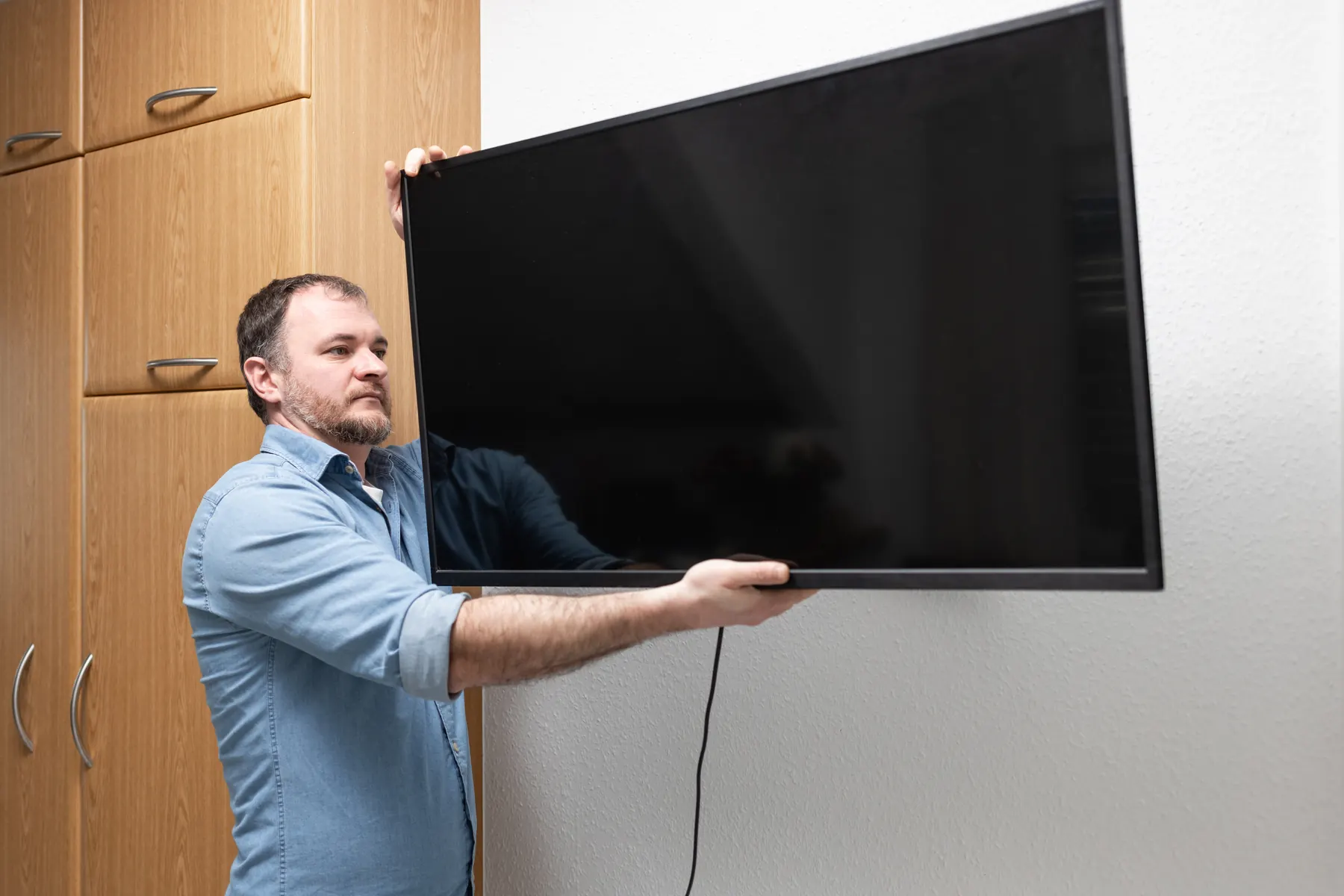
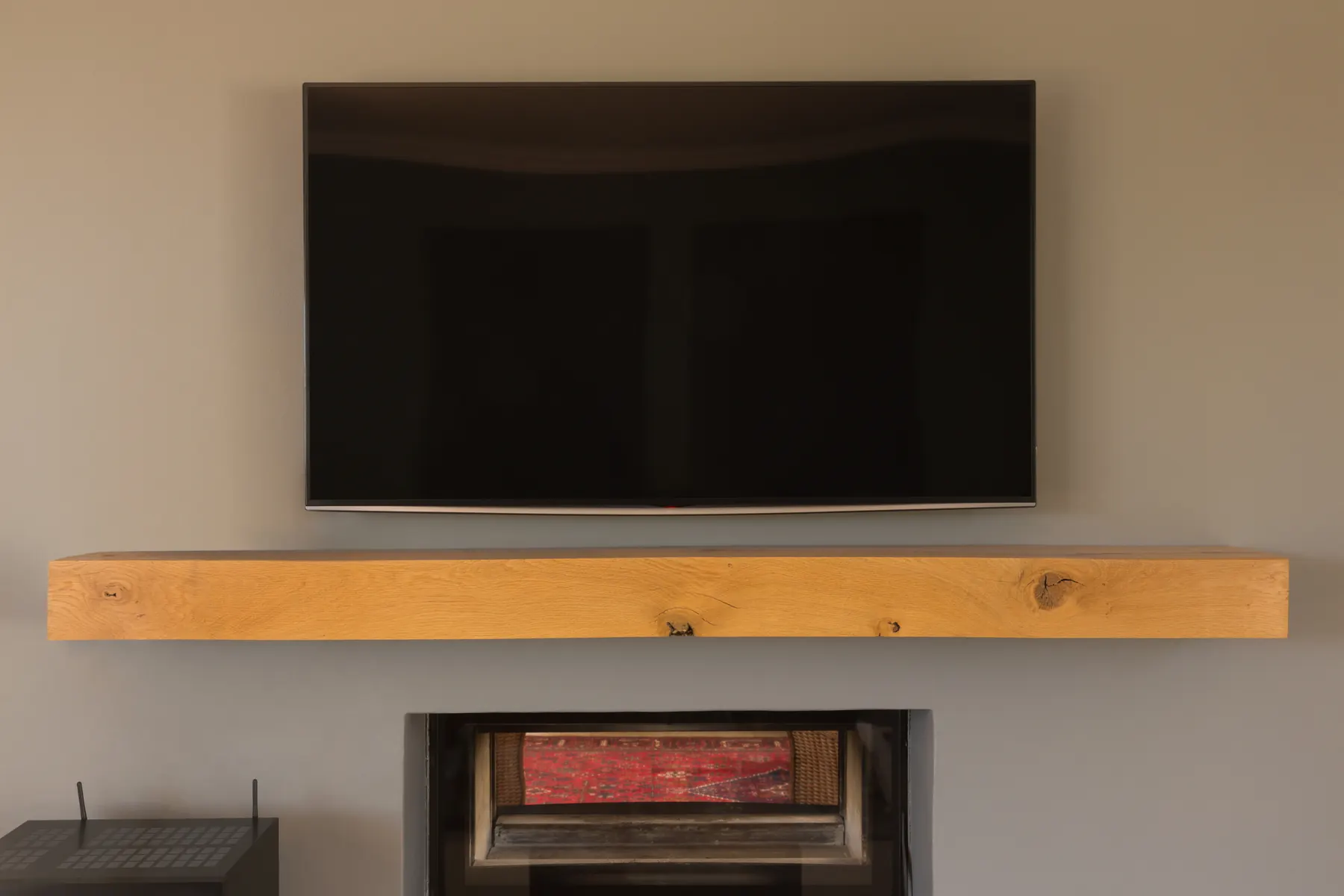
On a drywall wall the fixings are only as strong as the framing behind them, and that framing is an inch and a half of timber or a fold of thin steel, sitting at fixed intervals that may or may not be where you want the screen. Concrete has no intervals. The mount goes exactly where the room wants it, at the height you measured from the sofa, instead of shuffling four inches sideways to catch a stud.
A correctly anchored plate in sound concrete also has far more pull out resistance than anything available in board, which matters most with a long articulated arm. Condo walls, shear walls, elevator cores and party walls in towers across Toronto are routinely poured concrete or concrete block. Interior partitions in the same unit are usually steel stud and drywall, so one apartment can easily have both.
The screws in the box will not hold
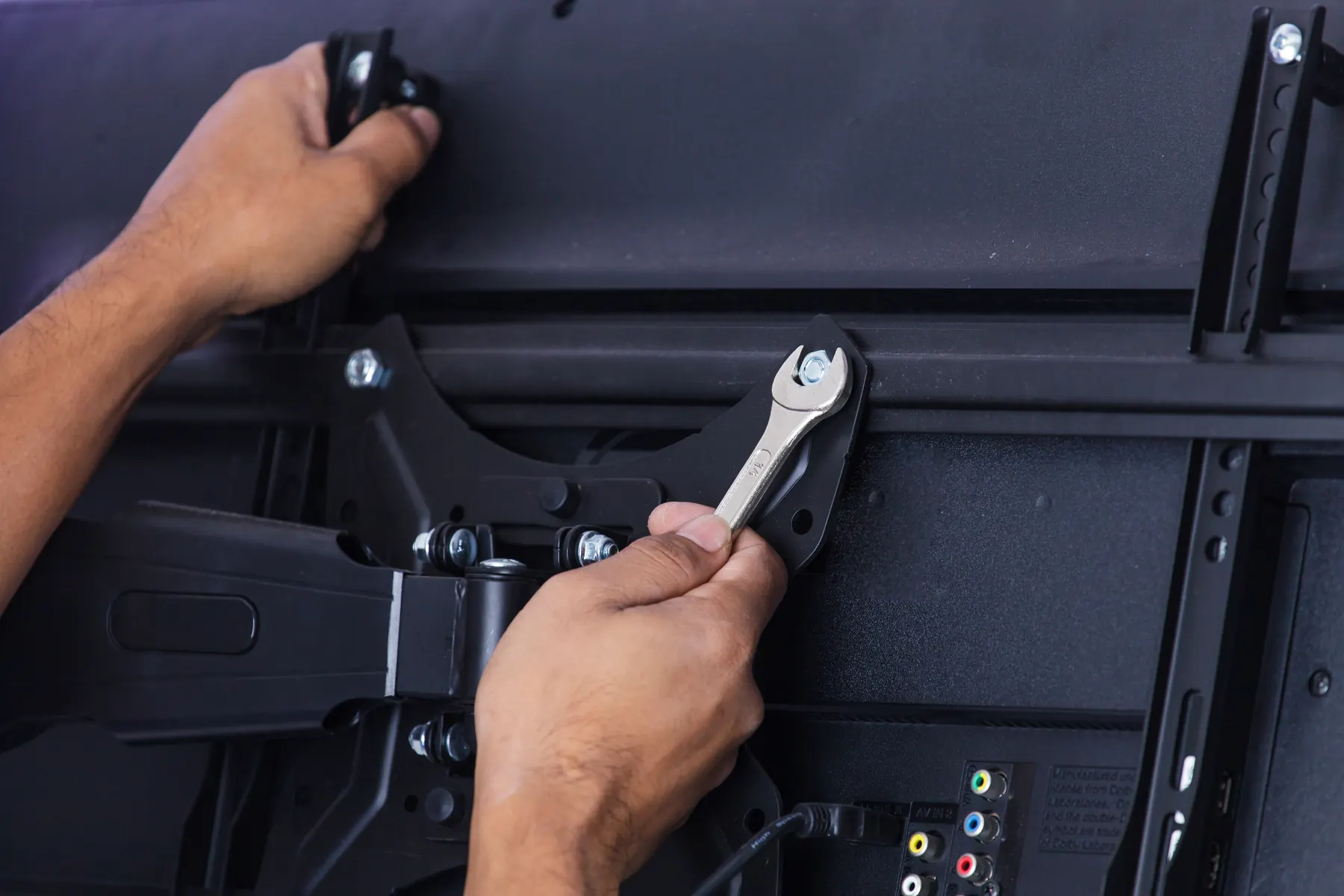
Almost every bracket ships with coach screws and plastic plugs. Those are for timber framing. Put a plastic plug in concrete and it will feel tight while you turn it and then creep under a sustained load, because the plug deforms and concrete does not hold a thread.
What concrete wants is a sleeve anchor or a wedge anchor. Both work by expansion: you drill a hole to a specified diameter and depth, clean the dust out of it, insert the anchor, and tightening the nut forces a sleeve or a cone hard against the sides of the hole. The grip comes from friction against solid material, not from a thread. Concrete screws are also an option in good dense concrete, and they are quick, but they are unforgiving about hole diameter and depth.
Cleaning the hole is the step people skip. Dust left in the bore acts as a lubricant and can cost a large part of the anchor rating. A blow pump or a vacuum takes seconds.
A hammer drill, not a driver
A cordless driver rotates. That is enough for wood and for drywall. Concrete is not cut by rotation, it is fractured, so it needs a hammer drill or a rotary hammer, which adds thousands of short axial blows per minute while the bit turns. With a masonry bit in a plain driver you will polish a shallow crater into the surface, burn the bit, and conclude the wall is impossible.
Rebar is the other reason to use the right tool and stay alert. If the bit stops making progress and the dust changes colour, you have found steel. You do not force it. You move the hole.
Where you do not drill at all
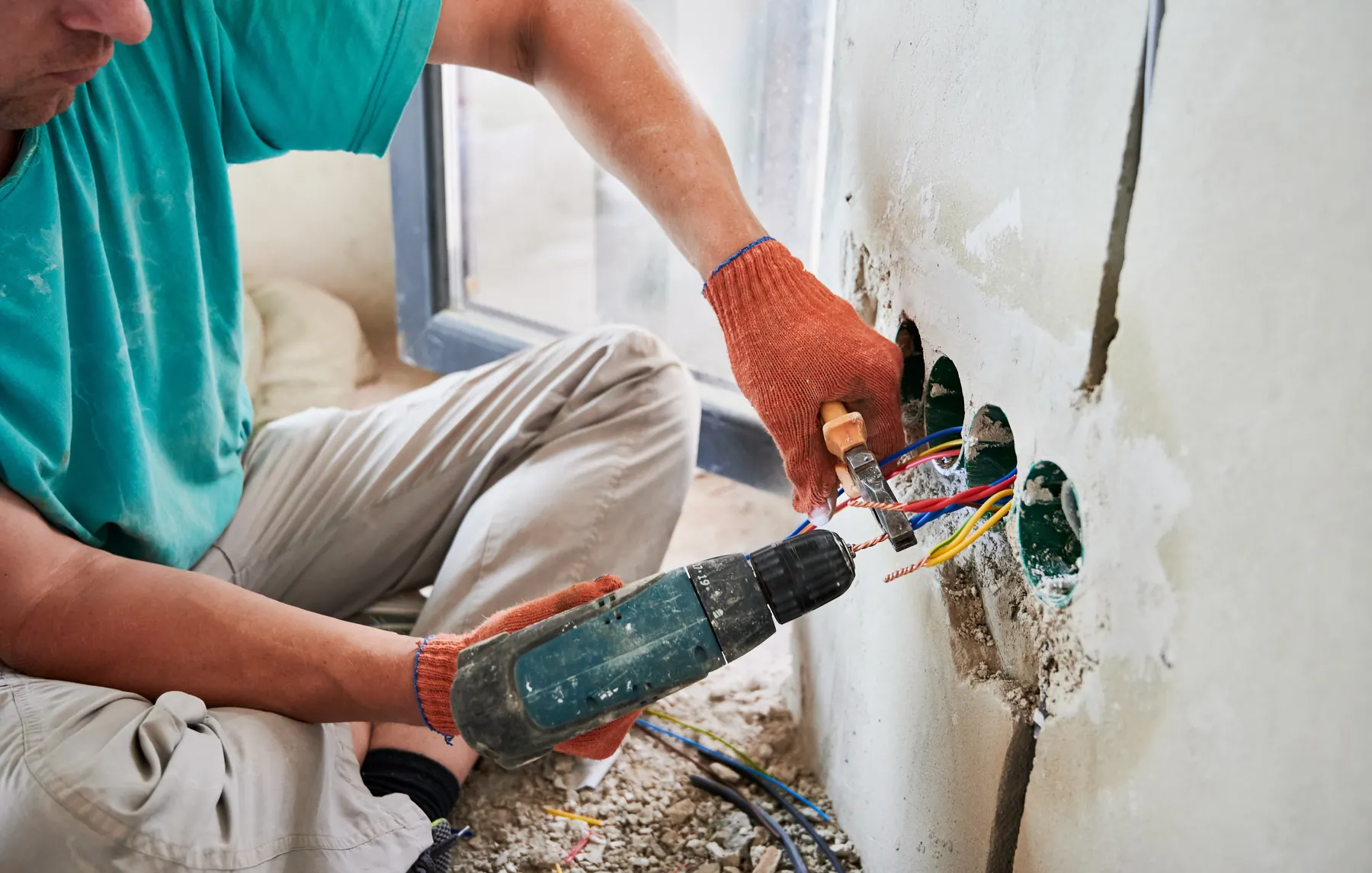
This is the part worth taking seriously in a tower. Many condo buildings are built with post tensioned slabs, which means the concrete floors and ceilings contain steel cables under enormous tension, grouted or greased inside ducts and invisible from the surface. Cutting one is dangerous and the repair is a structural job.
So nobody drills blind into a ceiling, and in some buildings certain walls are treated the same way. The rules are not uniform. They are set by the structure and by the building. Before a long anchor goes into anything that might be slab or shear wall, the sensible order is to ask the building what is allowed, check the unit drawings if they exist, and scan where a scan is appropriate. Where there is doubt, the screen goes on a different wall instead.
Booking the lift and filing the insurance
Condo work has an administrative layer that house work does not. Most buildings want the service elevator booked for deliveries and trades, often in a fixed window and sometimes only on weekdays. Many also want a certificate of insurance naming the corporation on file with management before anyone is allowed up.
None of that is difficult, but it is the thing that turns a short install into a wasted afternoon if it is left until the morning of the job. Tell TV Installers which building you are in when you book and the paperwork side gets arranged in advance. It is worth mentioning the unit number and the loading bay at the same time.